

Sh724 Million and a War Kenya Didn’t Start: The Hidden Cost of Geopolitical Risk for African Entrepreneurs
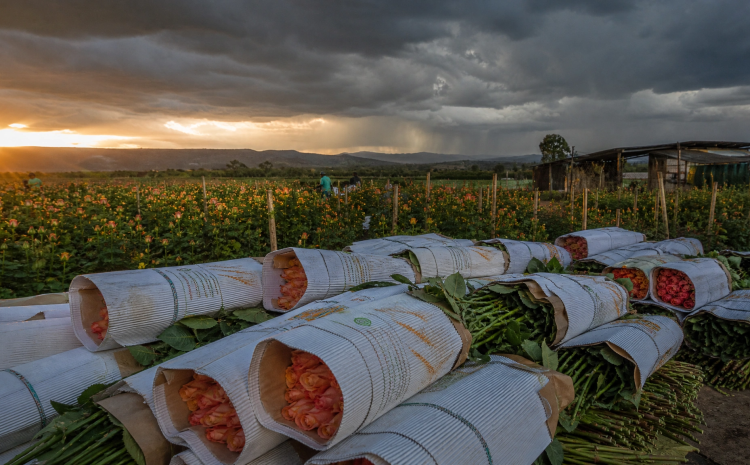
Kenya’s flower exporters lost Sh724 million. Not to mismanagement. Not to a bad harvest. To a war they had nothing to do with.
The disruption traces back to the Middle East where supply chains rerouted, air freight costs spiked, buyer markets spooked. Kenya’s cut flower industry, one of the most globally integrated agricultural sectors on the continent, absorbed the hit directly. Sh724 million in losses from a conflict thousands of kilometers away, in a region where Kenyan entrepreneurs have no leverage and no vote.
This is not a one-off story. It is a pattern.
The Recurring Math
The Africa Report is now flagging the Iran war as a potential trigger for Africa’s next jobs crisis. The mechanism is familiar: conflict in a major oil-producing or trade-routing region drives freight costs up, disrupts buyer confidence, tightens global credit, and contracts the export markets that African businesses depend on. The jobs don’t disappear with a single announcement. They erode. Order by order, contract by contract, until a factory cuts shifts or a logistics company stops hiring.
Nigeria recently deployed evacuation flights as tensions flared in South Africa, adding another data point to the same thesis: geopolitical instability anywhere on or near the continent translates into operational risk for businesses here. Even Rwanda, in securing its $250 million IMF package, did so against a backdrop of Middle East conflict that was already reshaping the terms of global capital availability.
The through-line is not dramatic. It is quiet and expensive. And most African entrepreneurs are not accounting for it.
The Structural Gap Underneath
Insurance penetration across East Africa sits at 2.4% of GDP in Kenya, 2.1% in Tanzania, and under 1% in Uganda. The industry itself acknowledges that small and medium businesses are catastrophically under protected; against fires, stock damage, supply chain collapse, and economic shocks.
This is not primarily a product availability problem. Most markets have insurance products. It is a pricing and perception problem: entrepreneurs treat insurance as an expense rather than a cost of doing business in a volatile world. When the shock arrives, and it has been arriving with increasing regularity, there is no buffer. The loss hits the business directly, then the workers, then the community.
The East African insurance sector is now calling for a shift: from reactive, crisis-driven purchasing to proactive risk planning; from complex paperwork to digital onboarding and mobile-first products; from industry jargon to plain-language education about what coverage actually does.
That shift is legitimate. But the more fundamental shift is the one that needs to happen in the entrepreneur’s own mind.
Repricing the Risk
Geopolitical volatility is a business cost. It has always been one. What has changed is the frequency and proximity of the shocks, and the speed at which they travel through globally connected supply chains.
A Kenyan flower exporter has exposure to Middle East conflict not because they chose to. Because their buyers do business in a world shaped by that conflict. An Ethiopian manufacturer has exposure to Red Sea shipping disruptions not because of anything they built. Because their inputs arrive by container.
The businesses that survive repeated external shocks are not the ones that got lucky. They are the ones that built resilience as a deliberate operating strategy; insurance coverage, supplier diversification, currency hedging, cash reserves, and scenario planning as standard practice, not emergency responses.
The Opportunity in the Gap
For entrepreneurs building in the financial services and risk space, the gap between what East African SMEs need and what they currently have is not a niche. It is a market.
Parametric insurance where products that pay out automatically when a defined trigger occurs, such as a shipping route closure or a commodity price threshold, is already being piloted in agricultural markets across the continent.
Embedded insurance, baked into the fintech platforms and e-commerce tools that SMEs already use, removes the friction of separate purchasing decisions. Risk advisory services tailored to small businesses operating in cross-border trade corridors are almost entirely absent.
The Kenya flower exporters who lost Sh724 million this quarter will rebuild. Most of them always do. But the ones who rebuild the fastest will be the ones who had coverage, had buffers, and had a plan for exactly this kind of hit.
The geopolitical tab is not going away.
The question is who in the African entrepreneurial ecosystem is building the tools to manage it, and who is still hoping the next shock lands somewhere else.
Risk is not a CFO problem. It is a founder problem, and in Africa’s current environment, it is one that comes without warning. At the Business Week Afrika Summit on October 1st and 2nd, 2026, resilience is part of the conversation: how the most durable African businesses are built to absorb shocks that no one predicted and keep moving. If you are serious about building something that lasts, this is where that conversation starts.
#TwendeBWA