

The Grid Landlord: Africa’s Biggest Utilities Are Reinventing Themselves Before the Market Forces Them To
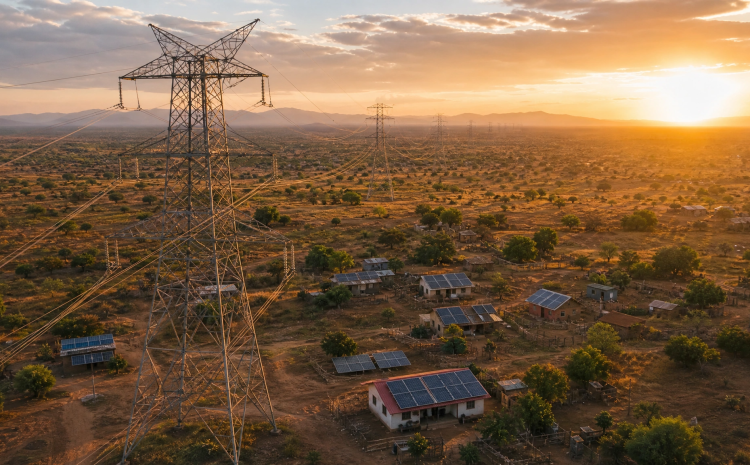
A regulatory gazette notice filed in Nairobi on May 8, 2026 received almost no press coverage. That notice ended Kenya Power’s exclusive retail electricity monopoly, a privilege the company had held since independence.
What Actually Changed
The Energy (Electricity Market, Bulk Supply and Open Access) Regulations 2026 allow power producers to sell electricity directly to large consumers, bypassing Kenya Power entirely.
The mechanism is called a wheeling charge. A fee Kenya Power and the Kenya Electricity Transmission Company collect when other producers use their grid to move power. In plain language: Kenya Power stops being the retailer and becomes the toll road.
The numbers explain why this is seismic. Large industrial and commercial consumers; factories, data centres, commercial estates, currently account for 70% of Kenya Power’s total electricity sales. That is 7,313 GWh out of roughly 10,500 GWh sold annually. That is the customer base that now has the legal right to shop elsewhere. The World Bank flagged the risk explicitly before the regulations passed, warning that large customers who currently cross-subsidize cheaper household tariffs are the ones who will migrate first. The government gazetted the regulations anyway.
KenGen, Kenya’s primary generating firm, had already signaled its position. In February investor communications, it announced it was seeking a transmission licence to wheel power directly to large consumers.
Centum is doing the same with its Akira Geothermal facility. The market did not wait for the gazette notice to move.
Standard Investment Bank analysts summarised it plainly:
“Kenya Power’s business model is set to transition from being an exclusive electricity retailer to an infrastructure landlord.”
SIB Kenya
The Same Play, Bigger Scale
Eskom is running an almost identical transition in South Africa. The utility launched Eskom Green, a dedicated renewables subsidiary, targeting 32 GW of renewable capacity by 2040, starting with a R1.2 billion, 75 MW solar project at its Lethabo coal station.
Eskom board chairman Mteto Nyati drew the line carefully at the announcement:
“Eskom is not entering this space to replace others.”
The signal is deliberate. The world’s most indebted power utility is repositioning as a platform, offering land, grid adjacency, and existing infrastructure to independent power producers rather than trying to outcompete them.
South Africa’s REIPPP programme has already delivered close to 7 GW of privately developed renewable capacity. That track record exists because the infrastructure for independent production was available. Eskom is now codifying that model at scale.
The Pressure from Below
While utilities restructure from the top, the market is restructuring from the bottom. East Africa drove 71% of all global off-grid solar kit sales in 2024, 6.6 million units out of 9.3 million sold worldwide, a 37% year-on-year surge. Sub-Saharan Africa accounts for roughly 85 to 90% of global off-grid solar kit volume. This is not aid-driven adoption. These are market-driven purchasing decisions by households and businesses that stopped waiting for the grid to arrive.
In Nairobi, Car & General just launched an LPG-powered tuk-tuk offering fuel savings exceeding 30% compared to petrol. A government minister stood at the launch. The vehicle targets urban transport operators and last-mile delivery fleets, exactly the businesses that have been paying the highest proportional cost for unreliable grid power.
Africa’s old energy model, monopoly utility, centralised generation, expensive captive customers, is being squeezed from both ends simultaneously. The middle is where the losses are.
Who the Window Opens For
The Kenya wheeling model creates something that has not existed in this market before:
Independent power producers can build generation capacity, sell directly to industrial customers, and use Kenya Power’s existing 160,000-kilometre network without building a single pole or wire. You generate. You pay the wheeling charge. Kenya Power becomes your delivery infrastructure.
That is a project finance story, a clean energy story, and an industrial services story simultaneously. It is also a signal that the 21% system losses still embedded in Kenya Power’s network represent both an efficiency problem and a business opportunity. Whoever helps solve that problem on behalf of the new grid landlord earns a structural position inside the infrastructure.
The constraint is real. Wheeling charge tariff rates have not yet been published by the Energy and Petroleum Regulatory Authority. Transmission access tensions between Eskom Green and South Africa’s independent developer community are already in front of the competition regulator. The model is structurally sound, the execution friction is where the early movers will earn their advantage.
The conversation about who builds Africa’s new energy infrastructure, and who profits from owning the grid beneath it, is one the continent’s most consequential founders need to be part of. The Business Week Afrika Summit on 1st and 2nd October 2026 will bring together the operators, investors, and builders who are already making these bets. Secure your seat at the table.
#TwendeBWA