

Kenya Closed Foreign Traders On Monday. By Tuesday It Had Opened Them Again.
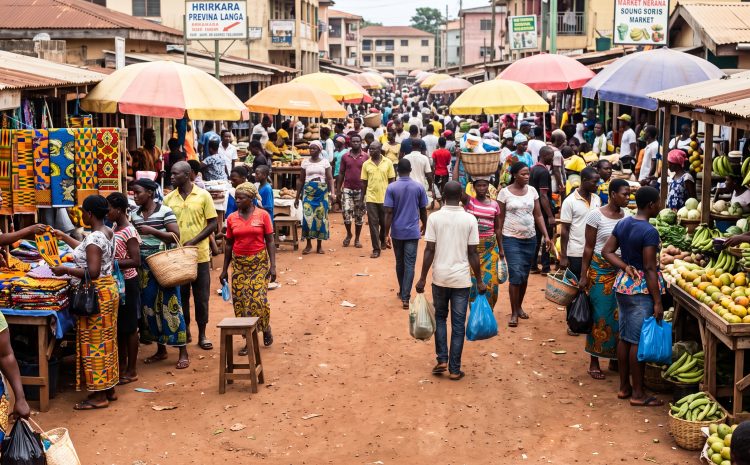
Kenya’s own statistics office settled the argument before it started.
Foreign owned enterprises in Kenya employ 224,769 people. 221,267 of them are Kenyan. The foreign share of that workforce is 1.6%, sitting on foreign direct investment stock of Sh1.458 trillion, about 11.27 billion dollars, up 8.5% in a year.
So when Kenya spent the first week of September deciding which foreigners it wants, the fight was never about jobs.
A week, in order
2 September. The president tells small-scale traders at State House that hawking and small-scale retail belong to Kenyans, and orders enforcement from the following Monday.
3 September. He confirms the exit of Tata Chemicals from Lake Magadi, a 115-year license, suspended in July.
4 September. Somalia deposits its instruments and becomes the 50th state party to the African Continental Free Trade Area.
7 September. Enforcement begins. 200 non-Kenyans cross into Uganda at a single border point. Ugandans, Burundians, Rwandans and Congolese move.
8 September. The deportations stop. The order becomes 90 days to regularize immigration, work permits, registration and licensing.
6 days from the order to its reversal. 1 day of enforcement.
“This is regulatory, aiming to ensure compliance with the East African Community Common Market Protocol and Kenyan law.”
MUSALIA Mudavadi
The protocol he named guarantees East Africans the right to move, work and supply services across the bloc. You cannot enforce a nationality rule by invoking the treaty that forbids it. The durable version has to be a statute, and it exists. The Local Content Bill 2025 requires 80% Kenyan staffing including the C-suite, and the president has directed that it be widened to cover small-scale trade and moved quickly.
Not a directive. A bill.
What nobody is arguing about
Ask a trader in Gikomba or Nyamakima what the foreign competitor actually has and nobody says a passport. They say the chain. The foreign trader holds it from import through wholesale to the stall, buying direct from the factory. The Kenyan trader buys from the wholesale layer the competitor owns. One is a supplier. The other is a customer of the supplier.
Not a passport. A container.
The money says the same thing. Kenya imported Sh671.17 billion of Chinese goods in 2025, up 16.5%, and sent Sh16.9 billion back, down 35.7%. The deficit hit Sh654.3 billion, the largest on record and 19% wider in a year.
That number is not made of hawkers. It is made of containers, and of who stands at the port when they land.
Deport the trader and the container still arrives. It gets collected by whoever is left holding the import line.
Kisumu answered the same question differently
On 10 September, 2 days after the national order was withdrawn, Kisumu published its own. The county’s 2026 Trade and Markets Policy ends roadside hawking and moves traders into designated market space, with a markets bill waiting on the assembly. It applies to every trader, whatever passport they carry.
Not who trades. Where.
That is the smaller claim and the bigger lever. It is enforceable on a Monday, and it leaves a market behind.
Who wins, who is squeezed, and the gap
Kenya’s informal sector employs 18.1 million people, 83.8% of everyone working, and took 87.2% of the 822,100 jobs the economy added last year. The formal sector holds 3.5 million. This is not the margin of the Kenyan economy. It is the Kenyan economy.
The winner is any operator who can put a Kenyan trader on the import line. Group buying, container sharing, direct-from-factory sourcing, sold as a service to informal retailers. Kyosk proved that model on fast-moving consumer goods. Nobody has built it for the categories this argument is about: textiles, hardware, phone accessories, household goods.
Squeezed is the wholesaler whose margin exists only because his customer cannot buy a container, and the trader who was told that removing a competitor was the same as gaining a supply line.
The gap is the window. Tens of thousands of traders across 4 nationalities now need status, permits, registration and licensing regularized against a 90-day clock, and nobody is selling that as a packaged service in the languages those traders speak.
The continental version is larger. Informal cross-border trade carries 30% to 40% of trade flows in several African regions, most of it moved by women, inside a free trade area that now has 50 state parties and 26 that have written it into law. A continent that ratifies free trade 50 times and turns its neighbors’ traders back in between is not confused about policy. It is missing an institution.
This is the conversion layer again, one step before the factory. Owning the next step starts with owning the order.
That institution is what the Business Week Afrika Summit exists to convene. On the 1st and 2nd of October 2026 in Nairobi, the people who draft local content rules, the operators who live inside them and the capital that decides whether a rule is a cost or a moat sit in one room. If your business is the line between a container and a stall, that room is your market. Secure your seat and join the builders: https://apps.little.africa/events/105
A passport can be checked at a border.
A container clears it, and then it goes to whoever placed the order.