

Ethiopia Promised Bitcoin Miners 98% Of Their Power. In September It Delivered 23%.
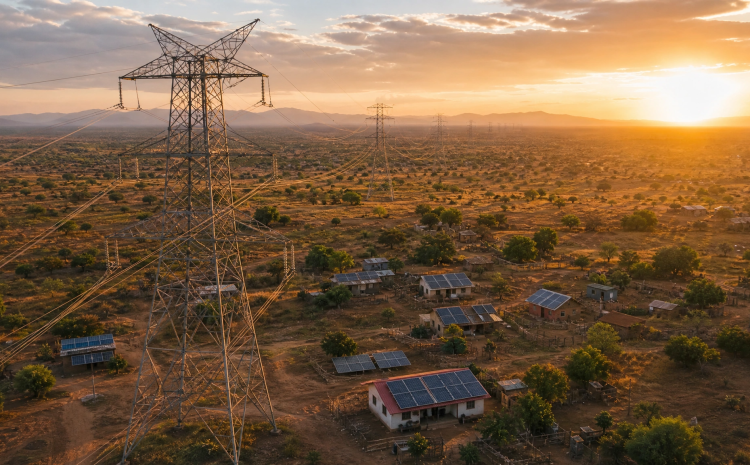
There is a mark on the inside of every dam wall where the water used to reach.
Nobody signs it and nobody negotiates it. It moves on its own, and when it drops far enough, every agreement written above it quietly stops meaning what it said.
On 15 September Ethiopian Electric Power cut the electricity flowing to the country’s bitcoin miners down to 23% of the volume it had contracted to supply.
Those contracts guarantee a minimum of 98%.
“Domestic consumers and strategic industries are always our priority.”
ASHEBIR Balcha, CEO Ethiopian Electric Power
El Niño had taken at least 20% of the inflow into the reservoirs. The utility reassesses in October. If the mark on the wall has not climbed back by then, the next thing to be cut is the electricity Ethiopia sells to its neighbors.
The customer was not a side business
Bitcoin miners paid EEP 50.37 billion birr last fiscal year, against a utility whose most recently published total revenue was 124.2 billion birr. They consumed roughly 33% of everything the country generated. They paid about 3.2 US cents a kilowatt hour, in foreign currency, which in Ethiopia is the scarcest input of all.
That power bought Ethiopia about 2.4% of the entire global bitcoin network.
It was one of the largest hard currency earners the state had, and the water level canceled 75 points of it in a single announcement.
Ethiopia’s installed capacity is 9,730 megawatts, roughly 95% of it hydroelectric. The Grand Ethiopian Renaissance Dam alone supplies about 52% of national generation. The diversification pipeline runs to 40 megawatts of wind at Aisha and 100 megawatts of solar.
The grid was running at about 60% utilization against a 67% target. Not because demand was missing. Because the water was.
The same man, the same day, went looking for 400 million euros
At the same annual briefing, Balcha confirmed EEP is negotiating 400 million euros from 3 Italian banks to finish the Koysha dam.
Nothing is signed. It is a negotiation, under an exceptional IMF dispensation allowing Ethiopia to borrow commercially for this one project.
Koysha is 2,200 megawatts, 3 billion euros, 77% built, and 3 years past the date it was supposed to be finished. Full operation is now scheduled for 2029.
Read those 2 announcements together. A utility told its largest paying customer there is not enough water, then asked a foreign bank for money to build somewhere to put more of it.
This is not incompetence. It is the only move available. But it names what nobody in African power has priced.
Ethiopia is not selling electricity. It is selling rainfall, and calling it a contract.
Everybody is signing against a grid like this one
Egypt is building a 1 billion dollar sovereign AI data center.
Côte d’Ivoire is building a state one at 66 million dollars.
Lesotho is negotiating 6.2 billion dollars of hydropower and AI data center investment with an American developer.
And a Kenyan hyperscale project was canceled in May because the electricity to run it was not there, in a country whose reserve margin then fell to 3.34%.
Every one of those deals assumes firm power. Not cheap power. Firm power. Ethiopia has the cheapest industrial electricity on the continent and has just demonstrated that cheap and firm are not the same product.
Who wins, who is squeezed, and the gap
The winners are anybody selling availability rather than kilowatt hours. A data center or a factory does not need 100% of its load from the grid. It needs to know what it will get in a dry October. Solar plus storage sized to cover the share a hydro utility will cut first is a product with a queue of customers already holding signed contracts and a 77% hole in them.
The squeezed party is every African offtaker who negotiated hard on price and never asked what the supply is indexed to, and every miner now running expensive hardware at a quarter power.
The gap is the instrument. There is no hydrology indexed power purchase agreement in African markets. There is no interruptible tariff that pays a customer to be cut. There is no cover that pays out when a utility misses an availability guarantee. All 3 exist in other markets. None is sold here, which is why a 98% guarantee was worth nothing on the morning it was tested.
There is also a fleet. Roughly 23 exahashes of mining hardware is sitting in Ethiopia running at a quarter power, and that hardware is portable.
Owning the next step has been the argument all along. Ethiopia owned the generation, the dam and the customer, and still could not own the weather.
That is the conversation the Business Week Afrika Summit exists to hold. On the 1st and 2nd of October 2026 in Nairobi, the operators signing power contracts, the builders selling the layer that makes them reliable, and the capital deciding what it will underwrite sit in one room. If your business runs on electricity somebody else promised you, that room is where you find out what the promise is worth.
Secure your seat and join the builders: https://apps.little.africa/events/105
A concrete wall in the Ethiopian highlands, stained in a long horizontal band where the water stood all of last year.
And 4 meters below it, the water.