

Nigeria’s Ride-Hailing Market Is Worth $450 Million And Just Lost Its Biggest Operator. Here Is What That Actually Says.
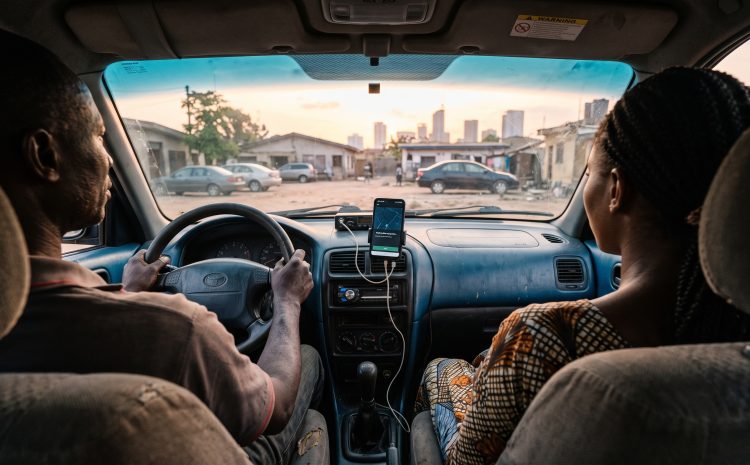
“The reason I bought this car was to use it as an Uber ride. I am a foundation member.”
DAVID, Lagos driver of 10 years
On September 2, Uber stopped taking rides in Nigeria after 12 years, and in Uganda on the same day. It gave no Nigerian reason. The wording was a review of evolving business priorities across Africa. Rider support runs 21 days, the Help Centre stays open to September 23 to settle balances, and drivers were offered a goodwill payment Uber has not disclosed.
David’s car is still in the driveway.
Everything else in this story moves. The car does not.
Do not read the exit as a verdict on the market.
Nigerian urban mobility and ride-hailing is worth about $450 million in 2026 and is growing 11.8% a year toward $879 million by 2031, on app-booked trips projected to rise from 134.3 million to 228.9 million. The continental market is around $2.5 billion. This is not a market that failed.
It is a market that got outbid.
The same week Uber closed Nigeria, it cut roughly 3,300 jobs, about 10% of its workforce, and restated a plan to put more than $10 billion into robotaxis with driverless rides in 15 cities by the end of 2026. Uber has never linked those decisions to Nigeria and neither will we. But $450 million growing at 11.8% is arithmetic, and so is $10 billion.
Now count the bodies
More than 2,500 ride-hailing applications have tried to enter Nigeria since Uber arrived in 2014, on the registration records of the Amalgamated Union of App-Based Transporters of Nigeria. Almost all of them are gone.
- Oga Taxi.
- Smart Ride.
- Gudride.
- Alpha 1.
- GLT.
- RideMe.
- Tripz.
- Go247.
- T-Cab.
- Taxigo.
- MotionPlus.
- Gidicab.
- Soole.
- Easy Taxi.
- Afro Cab.
“More than 2,500 ride-hailing applications have attempted to enter the market since 2014.”
IBRAHIM Ayoade, general secretary, AUATON
Read that list again and notice what every entry has in common. They were all apps. 2,500 teams proved, at their own expense, that software is not the scarce thing in Nigerian mobility. You can write the app. Thousands did.
What is still standing, and what it is standing on
3 platforms carry the market now. Bolt has the brand and the driver network, and overtook Uber as Nigeria’s most downloaded mobility app before Uber left. inDrive competes on a different mechanism, letting rider and driver negotiate the fare directly.
And then there is LagRide, which is not really competing on an app at all.
LagRide is Lagos State backed, and its product is a Drive-to-Own programme: the driver does not bring a car, the driver earns the car. It has been handing over vehicles in batches, 20 drivers earlier this year and 10 more in the second phase, and it has secured a $100 million facility from United Bank for Africa to scale it.
That is not a technology company. That is an asset financier with a dispatch screen attached.
The pattern this ledger keeps finding
Yesterday’s story was about Kenyan credit, and it landed on the same sentence: the growth is not in lending money, it is in putting an asset in someone’s hands and keeping control of it. Nigerian mobility is that argument with 4 wheels on it.
Uber’s own best published number for its Nigerian value was N6.1 billion, about $9.6 million, of additional driver income in 2023. Against commissions reported between 25% and 30%, against drivers who protested fares in 2017, 2023 and 2025, and against a July 2026 direction from the Public Complaints Commission that the Federal Capital Territory Administration intervene on those same complaints.
The platform took a share of every trip. The driver took the loan, the fuel, the maintenance and the risk. When the platform left, the driver kept all 4.
Who wins, who is squeezed, and the gap
The winners are whoever owns vehicles and can finance them. LagRide has a $100 million facility and a state behind it. Bolt and inDrive inherit riders and drivers for free, and inherit the same unit economics Uber has now priced and declined.
The squeezed are the drivers, who financed the asset that made the market possible and have no claim on the demand it generated. Uber leaves Nigeria holding 12 years of trip data on Nigerian roads. No Nigerian institution holds a copy.
The gap is the layer LagRide is building alone. Vehicle underwriting for drivers with no payslip. Maintenance and uptime, because a financed car that is off the road repays nothing. Insurance built for a fleet somebody else drives. And the demand book itself, because 2,500 founders built the front end and none of them built the thing that survives an operator walking away.
The Business Week Afrika Summit runs in Nairobi on October 1 and 2. The people who finance vehicles, the people who move goods and people for a living, and the platforms that sit between them are usually 3 separate conversations, which is exactly how a market ends up with 2,500 apps and no owner. That room puts them at the same tables. Secure your seat and join the builders who would rather own the asset than rent the audience: https://apps.little.africa/events/105
The app is gone from the phone. The car is still in the driveway, still financed, still needing a passenger on Monday morning.