

The Kenyan President Is Doing Sales Calls. Are Kenya’s Entrepreneurs Ready to Close?
In the same week that Norway’s Deputy Foreign Minister flew to Lagos to visit a startup, Kenya’s President flew to Europe to sell his country’s economy.
William Ruto’s week-long tour, Belgium, Norway, Finland, was not a diplomatic courtesy visit. He sat with King Philippe of Belgium, the President of the European Council, the President of the European Parliament, Norway’s Prime Minister Jonas Gahr Støre, Crown Prince Haakon, and Finland’s President Alexander Stubb. The itinerary reads like a state-level sales pipeline. Heads of government, royalty, and the most powerful offices in the European Union, all in sequence.
The product he was selling: Kenya.
The Agreement Already Exists. The Question Is Who Activates It.
Underneath the diplomatic theatre is a structural tool that most Kenyan entrepreneurs have not yet fully reckoned with.
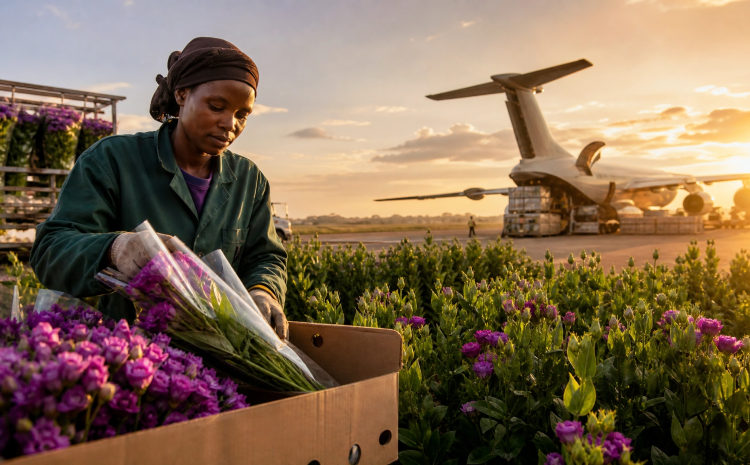
The Kenya-European Union Economic Partnership Agreement grants Kenyan exports duty-free and quota-free access to the entire European market. No tariffs on Kenyan tea entering Germany. No quotas on Kenyan cut flowers landing in Amsterdam. No duties on Kenyan coffee reaching Scandinavian roasters.
This is not a promise or a negotiating position. It is a signed, operative agreement. Ruto’s European tour is activation work. Converting a legal framework into a live commercial relationship by building the political and institutional relationships that make businesses on both sides feel safe investing in the channel.
The sectors targeted are specific: tea, coffee, cut flowers, horticulture, renewable energy, electric mobility, climate-smart agriculture, blue economy industries, technology, and manufacturing with value addition. Kenya’s State House described the engagement as one that will “unlock greater opportunities for Kenyan farmers and exporters.”
The door is open. The question is whether enough Kenyan entrepreneurs are standing behind it.
The Pattern This Represents
Kenya is not the first African nation to use presidential diplomacy as a market-opening instrument, but Ruto’s tour crystallizes a pattern worth naming.
Across the continent, the most commercially effective African governments are increasingly functioning as market infrastructure, not just regulators and tax collectors, but active connectors between domestic producers and global buyers. Ethiopia’s government built the Ethiopian Airlines network partly as a logistics backbone for its export economy. Rwanda has used state diplomacy to position Kigali as the preferred conference and headquarters destination for international organizations. Now Kenya is deploying its head of state as the opening act for an export push.
This matters to entrepreneurs because it changes what state relationships are actually for. A president meeting the President of the European Parliament is not just politics. It is the creation of conditions of trust, visibility, institutional familiarity, that reduce the friction for every Kenyan exporter who follows in that wake.
The tea farmer in Kericho and the flower grower in Naivasha may never know Ruto met King Philippe. But the distribution channel that gets unlocked, the European importer that takes a meeting because Kenya is now visible at the right levels, the financing facility that opens because bilateral trust exists, these are the downstream effects of diplomatic market infrastructure.
The Gap Most Entrepreneurs Are Leaving Open
The risk in this story is not that the opportunity is too small. It is that the entrepreneurs best positioned to benefit are not yet export-ready.
Duty-free market access is a structural advantage. But it only converts into revenue for businesses that have solved the problems upstream: consistent product quality, compliance with EU standards and regulations, reliable supply chain capacity, and the ability to communicate a Kenyan brand story to a European buyer.
The blue economy and renewable energy sectors are particularly under-leveraged. Kenya has among the most advanced geothermal and wind capacity in Africa. The EU’s clean energy transition creates genuine European demand for both the energy assets and the expertise Kenya has built.
Electric mobility is another live conversation. Kenya’s climate policy and infrastructure positioning make it a credible partner for European manufacturers looking for African market entry.
None of these opportunities require waiting for the next presidential tour. The EPA is already active. The relationships are being warmed at the highest level. The gap between the diplomatic infrastructure Ruto is building and the commercial infrastructure Kenyan entrepreneurs have built is the most important gap in this story.
When presidents open doors, Entrepreneurs have to walk through them.
These are precisely the conversations Business Week Afrika will be putting on the table at the BWA Summit, 1st & 2nd October 2026.
#TwendeBWA