

4 Countries Just Proved the Margin Can Stay Home
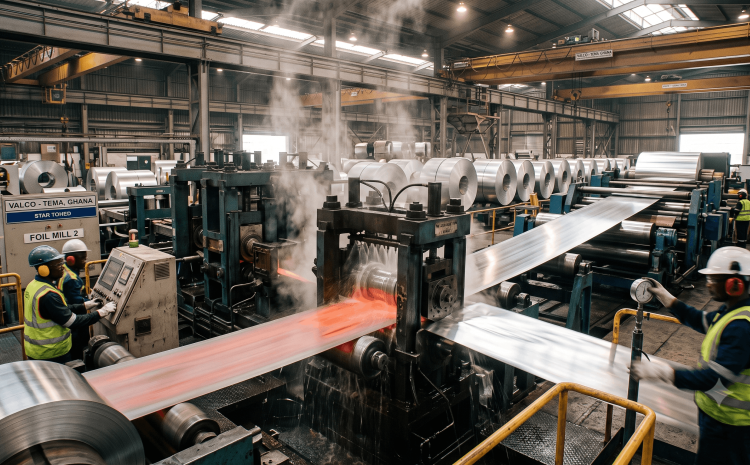
What they tell you about Africa’s minerals: Dig it up, ship it raw, let someone else keep the margin.
What they don’t tell you: that model is already cracking, in four countries, in the same 2 weeks.
The diamonds
Democratic Republic of Congo has spent a century as the world’s supplier of rough stones and almost none of the world’s supply of cut ones. That is now changing.
A Swiss processing firm has moved in to cut and polish diamonds inside the country, the first real crack in a monopoly that has sent Congolese stones to Antwerp and Mumbai for finishing since colonial times. The stone leaves the ground the same. What happens next no longer has to happen somewhere else.
The metal under the ground
Zambia’s copper belt is in the middle of a rush.
Citi is now tracking on spreadsheets in New York and London. Zimbabwe has just issued a 60,000 claim mining cadastre, the paperwork that turns informal digging into investable ground.
Nigeria’s Kaduna State has confirmed platinum, gold and lithium deposits and is actively courting the processors, not just the diggers. UNCTAD puts lithium demand up 353 percent by 2040.
The demand wall is real. The question every one of these countries is now asking is whether the processing plant gets built next to the mine, or 3 oceans away.
The proof it can be done
Ghana already answered that question twice this month.
GoldBod, the state’s new gold board, has set a ceiling on how much raw bullion leaves the country before it is refined. And Ghana’s Integrated Aluminium Development Corporation just signed a 300 million euro deal with Italy’s Danieli to build a foil rolling plant at Tema, 40,000 to 45,000 tonnes a year, feeding straight into packaging and pharmaceutical supply chains.
What this echoes to the Entrepreneur
Own the next step. That is the thesis this entire pattern keeps proving, cocoa, cotton, pharma, and now the hard assets under the ground.
The raw material was never the whole story. The refining step is where the margin lives, and Africa has spent a century watching it happen somewhere else.
The gap this opens
Who wins: engineering firms who can build smelters, refineries and rolling plants at African scale, not import one; battery and packaging manufacturers who can now source locally processed lithium, copper and aluminium instead of importing it back at a markup; the founders who build the trading desks around processed goods instead of raw ore.
Who gets squeezed: the trading houses whose entire model depends on buying raw and shipping it out, and the foreign refiners who have priced in Africa’s raw supply as permanent.
The gap to build into: beneficiation capacity itself, the smelters, foundries and processing lines, is still mostly unbuilt. Ghana just proved the capital and the contractor both exist. The next country to copy that model first captures the margin the last hundred years gave away.
That capital, the kind that funds a refinery instead of just a mine, is exactly what the Business Week Afrika Summit is built to connect founders to. On October 1 and 2, 2026, the room is full of the people who fund the next step, not just the first one.
Secure your seat and join them: https://apps.little.africa/events/105
The stone still comes out of Congolese ground. The metal still comes out of Zambian and Kaduna ground. What is different now is where the value gets added, and who gets to keep it.