

Africa’s Power Gap Just Became a Market
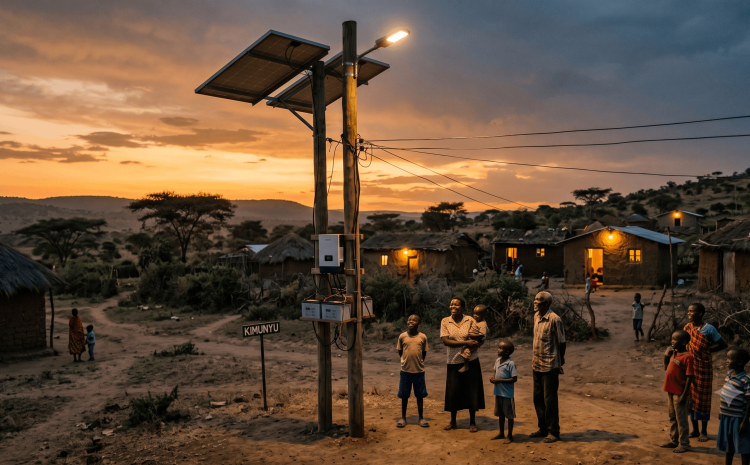
By 2030, WeLight wants 1 million African homes to flip a switch for the first time.
Work backward from that number and you land on 650 million dollars, a new backer called IFC, and 4 countries that share one problem:
The grid never came.
Africa’s largest mini grid operator just raised the sum to prove the problem is finally investable. About 450 million dollars is earmarked for Nigeria and the Democratic Republic of Congo, 200 million more for Madagascar, Mali and a 5th market still to be named. IFC joins AXIAN Group, Sagemcom and Norfund on the cap table.
The target is a tenfold jump in connections inside 4 years.
Rewind further and the case for that number gets easier to see.
Nigeria and DR Congo alone hold roughly 170 million of the 560 million plus sub Saharan Africans still living without power.
That is not a gap anymore, but a market WeLight has just priced it.
The old grid logic
The old logic said power had to travel from a central plant, down a national line, to a home. That line took decades to reach the villages that needed it most, if it reached them at all. Mini grids threw that logic out.
Generate the power where the demand already is, sized to the village, financed like an asset, not a public utility.
This is the value addition instinct applied to megawatts. Don’t wait for someone else’s grid to reach you. Build your own, and sell the connection.
What 650 million dollars actually buys
Money at this scale does not just buy panels and batteries. It buys the confidence to commit to a decade long build out, in 4 markets at once, with an institution like IFC underwriting the risk that scared off smaller capital for years. That is the real signal in this raise. Off grid power has crossed from a development story into a capital markets one.
The gap this opens
A mini grid solves generation. It does not solve what a household or a small business does with power once it arrives. That is where the next builders sit.
Who wins: the operators and technicians who install and maintain WeLight’s network as it scales tenfold, equipment financiers who can put irrigation pumps, cold storage units and milling machines into newly powered hands, and local entrepreneurs who franchise the last mile, billing collection, meter management, customer support, village by village.
Who gets squeezed: the diesel generator dealers and kerosene sellers who have quietly been the real utility company in unlit villages for a generation. Reliable, metered power is the product they were never able to offer.
The gap to build into: productive use financing. A connection means nothing to a business owner who cannot afford the appliance that turns power into income. The founder who builds the financing layer between WeLight’s meter and a shopkeeper’s freezer is building the second half of this story, and nobody has claimed it yet.
That gap, the space between capital raised and capital used well, is exactly what the Business Week Afrika Summit exists to close. On October 1 and 2, 2026, the builders solving the second half of Africa’s infrastructure story get a room with the investors funding the first half.
Secure your seat and join the builders closing that gap: https://apps.little.africa/events/105
Fast forward to 2030 again. A million homes, lit for the first time, are not WeLight’s achievement alone. They are proof of a market someone still has to build the rest of.