“The one who trusts risks being wrong once. The one who is trusted has to be right every time.”
Dr. Gary Conille
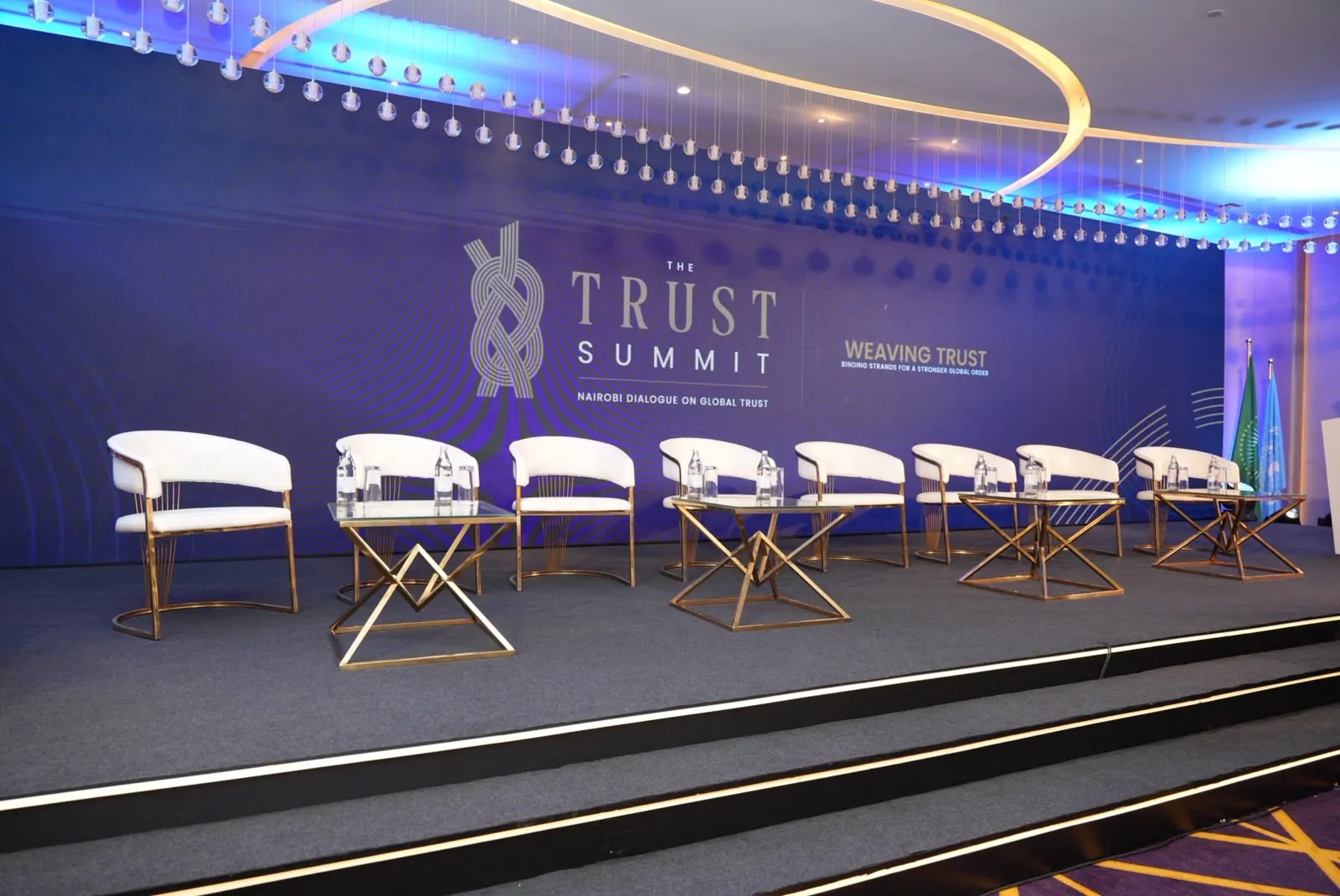
Conille, the UN Resident Coordinator in Kenya, said it from the podium on the 2nd day of the inaugural Trust Summit, held at the Glee Hotel in Nairobi from 21st to 23rd October 2026. Giving trust is cheap. Keeping it is expensive.
Kenya’s foreign ministry, the Executive Office of the President and Strathmore University convened it with UNDP Kenya, the Open Government Partnership, Konrad-Adenauer-Stiftung and the Ford Foundation. It closed on a 29-point declaration. Its 27th point gives a business reader the phrase to keep: the trust tax.
The frontline
Dr. Abraham Korir Sing’Oei, Principal Secretary of the State Department for Foreign Affairs, opened by asking for something conferences rarely make room for: a space to be vulnerable.
“Conversations on trust are very sensitive but they are conversations that need to be had.”
Dr. Abraham Korir Sing’Oei
Chief Justice Martha Koome said people must trust that the courts will deal with disputes fairly. Senate Speaker Amason Kingi promised to win that trust back through a public participation bill.
Then the room turned the question around. Caroline Gaita, Executive Director of Mzalendo Trust, said trust cannot be talked into being.
“We can’t build their trust through talk, we must earn it and build a feedback loop.”
Caroline Gaita
Dr. Vincent Ogutu, Vice-Chancellor of Strathmore University, set the academic standard: pursue the truth relentlessly, and abide by it once you find it. Then he asked every person in the hall whether they lived that way themselves.
Sean Karanja, a venture capitalist and startup builder, took the idea to money. Truthful capital, he said, looks for truthful entrepreneurs, and the founders it trusts and backs are the ones who lead with action. Investors fund a business and expect transparency and returns in the time frames agreed. He also asked Africa to write its own data.
Trust, on the first morning, was something you show.
Who pays
In the Creativity Baraza, the point was money. Angela Ndambuki, once a singer with the girl group Tattu and now the recording industry’s regional director for Sub-Saharan Africa, put it plainest. Trust, she said, comes when there is payment.
At the end of the day, we cannot eat culture.
Angela Ndambuki
The room heard of a $54 million shortfall in what Kenya’s collective management of music delivers. By regulation, a collecting society must pay out at least 70% of what it collects to the people who own the rights. In 2021, the Kenya Copyright Board moved to deregister all 3 music societies for paying out too little.
At the panel “Who are the custodians of trust?”, Esther Ngari, chief executive of the Kenya Bureau of Standards, took the hardest question:
What happens when a product looks compliant and fails in practice?
Her answer was fertilizer. In 2024, KEBS pulled 5,840 bags of substandard fertilizer from National Cereals and Produce Board stores. She said the coverage missed the rest: KEBS investigates every actor in the value chain, and manufacturers face the consequences, which can mean their product destroyed.
Auditor-General Nancy Gathungu said accountability is about enforcement, and that the law holds culprits personally liable “whether in or out of office”. Clare Akamanzi, chief executive of NBA Africa, gave the line a founder can use: building trust is about the demonstration effect. Show the work, and trust follows.
On the 2nd day, the panel “Trust by Design” put trade on the same bill. One panelist called Kenya’s stops on avocado exports the best thing to happen to a market that was losing trust in the product, because buyers abroad had no way to check the quality of fruit coming from inland. Kenya has closed the export season more than once over immature fruit, and from April 2026 every fresh avocado bound for export is inspected at the packhouse.
Asked whether Kenya can keep the trust of Washington and Beijing at once, Ambassador Alfred K’Ombudo said it was never a choice. The question is whether the goods Kenya offers are tradeable overseas.
Every panel found the same bill. Someone always pays it.
The bill
On 23rd October 2026, the summit adopted the Nairobi Declaration on Trust and Call to Action. Most of it reads as diplomacy. 1 clause reads as an invoice.
Low trust between states, it says, raises the cost of doing business through “duplicative conformity assessment and re-testing, correspondent banking de-risking and higher trade finance costs; duplicative data compliance requirements, high risk premiums on finance and costly logistics delays.“
That list is a week in the life of an African exporter.
The declaration’s answers are institutions. An annual Regulatory Trust Index. Regulators recognizing each other’s tests and certificates through the East African Community and the African Continental Free Trade Area, “to reduce the duplicative compliance costs of distrust”. A Coalition on Global Trust. A Nairobi Trust Council, hosted by Kenya. A Global Trust Facility at the UN, funded voluntarily over 4 years and run by UNDP, to pay for accreditation bodies, data protection and judicial cooperation.
And point 27 asks UNCTAD for a study every 2 years on what distrust costs the world, “to quantify the trust tax”.
29 points. 1 of them is a price.
The summit meets again in 2 years. Its 3rd day carried the only title that will matter by then.
From promise to proof.