

54 African Women Were Named Yesterday. Female Founders Took 2.8% Of The Continent’s Capital This Year.
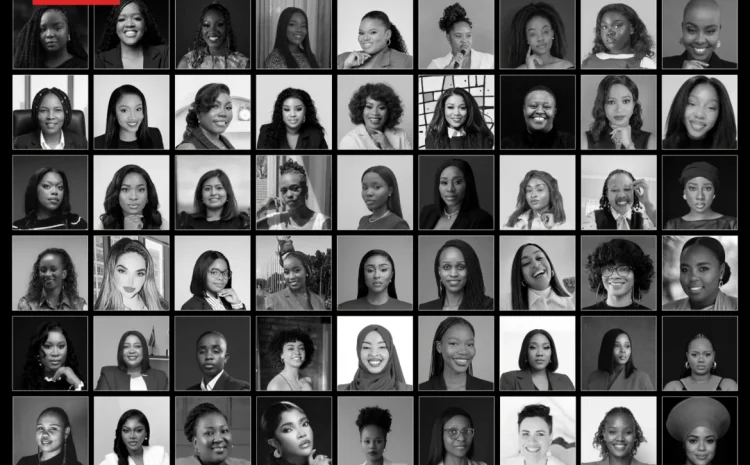
Image from Director Woman Website
On 12 August 2026, a South African platform named 54 winners: women building Africa’s next decade.
9 of them are Kenyan.
1 of them runs this platform.
Director Woman, a South African publication covering women in leadership, announced the winners of its 2026 Future 54 Leading Women cohort yesterday morning. Over 100 nominations came in across 6 countries. 54 women won coming from South Africa, Nigeria, Kenya, Botswana and Lesotho.
Read the Kenyan column.
Winnie Gathu, founder and executive director of Girl Code Movement. Thayu Kilili, founder of Creatives Garage. Caroline Nyaga, founder and CEO of the Women in STEAM Initiative. Jael Owino, founder and chairperson of TechBloom Africa. Belinda Odhiambo of Belshy Global Solutions. Elizabeth Waliuba of Imarisha Usawa. Christina Horace of Miss Kibichi. Fathiya Nur, journalist and digital storyteller.
And Salma Ibrahim, founder of Business Week Afrika, which is the publication you are reading.
We are naming our own founder in our own pages, so take the disclosure and keep reading.
The list is not the story. What it stands in for is.
The list is doing a job the capital market is not.
Here is the number that sits underneath every one of those 54 winners. In the first 5 months of 2026, ventures led by female CEOs took 2.8% of all African tech capital. That matches the record low set in 2022. Female CEOs accounted for 8.3% of funded startups, down from 15.3% in 2023. Across those 5 months, 60 startups with a female CEO raised anything at all, against 564 in all of 2021.
So the recognition is arriving and the money is not.
That gap is a measurement problem, and somebody is already measuring it correctly.
What they tell you is that the woman running a business is the harder credit risk, because her enterprise is younger, smaller, less formal and thinner on paperwork.
Here is what is actually true.
KCB Group has put Sh160bn into women-led businesses by March 2026 under its FLAME program, against a Sh250bn commitment, with Sh90bn still to deploy. The bank reports those borrowers repaying strongly while growing their enterprises. In Nigeria, Moniepoint found women defaulting 2.5 times less often than men while holding 36% of the loan book. Credit Direct, running roughly 300,000 borrowers, splits delinquency at 7.8% for women against 10.9% for men.
3 institutions. 2 countries. 1 finding.
Every lender that has actually measured African women borrowers has found them to be the better book. The capital allocators who have not measured them are the ones still calling it a risk.
This is the same lesson this platform keeps arriving at from different doors. The crate that cannot be certified does not clear the port. The trader with 10 years of repayment history has no file a second lender can read. The problem was never the asset. The problem was always the proof, and whoever supplies the proof owns the market that forms around it.
An awards list is a proof mechanism. Some may call it crude, published once a year by a magazine, with fair questions about the standard behind it and how a fund manager would query it. Those questions get answered with time and iteration.
What matters is that it supplies PROOF, and proof is the baseline of market success.
Who wins, who is squeezed, and the gap
The 54 win twice: the award, and a year of visibility alongside the 100 plus who were nominated and now sit in a database somewhere. Visibility is the first input to a deal, and they have it for a year.
The squeezed are the funds and corporates running gender-lens mandates with no pipeline they can actually search. A supplier diversity target at a multinational, a women-focused facility at a development bank, a 30% procurement rule: all of them need verifiable, contactable women-led businesses, and all of them are working off magazine features and personal networks.
The gap is the index. Not another awards night, but the searchable, verified record underneath one: who she is, what the business does, how long it has traded, what it has repaid, who has audited it. Charged to the institution doing the searching, never to the founder being searched for, because the founder is not the one with the budget problem.
Somebody already builds the operating half of this. Wandia Gichuru runs 29 Vivo Fashion Group stores across Kenya, Rwanda and Uganda in a category where over 90% of clothing sold in East Africa is imported.
“We work backwards, starting from a price point we think will work and then calculate whether we can produce the garment within that price.”
WANDIA Gichuru, Vivo Fashion Group founder
That is a woman running a 3 country retail operation on a stated method. There is no register a lender, a landlord or a wholesale buyer can pull that up from. There is a magazine list.
The Business Week Afrika Summit lands in Nairobi on 1 and 2 October 2026, and it is the room this problem needs. The founders on lists like this one, the bankers holding the repayment data that contradicts the market, and the fund managers with a gender-lens mandate and no pipeline are currently 3 groups who read about each other. For 2 days they are in the same building, which is where the index gets started rather than described.
Secure your seat and join the builders solving this in person: https://apps.little.africa/events/105
54 women were named yesterday because there was no other way to find them.
Will you be the one who builds the way?