

Africa Is Buying Power Faster Than It Can Use It
In Gisagara, southern Rwanda, there is a power station that can burn 2,191 tonnes of peat a day.
It digs up 600.
The plant was built for 70 megawatts. It produces 30 to 35. It sits on 155 million tonnes of its own fuel and runs at half output, because nobody can get the fuel out of the ground fast enough to feed the thing that burns it.
That is not a Rwandan problem. That is the shape of Africa’s whole energy story right now, and last week Kenya’s national utility said it out loud.
What they tell you.
What they tell you is that Africa’s energy problem is a shortage of generation. Build more. Import more. Put panels on more roofs, faster.
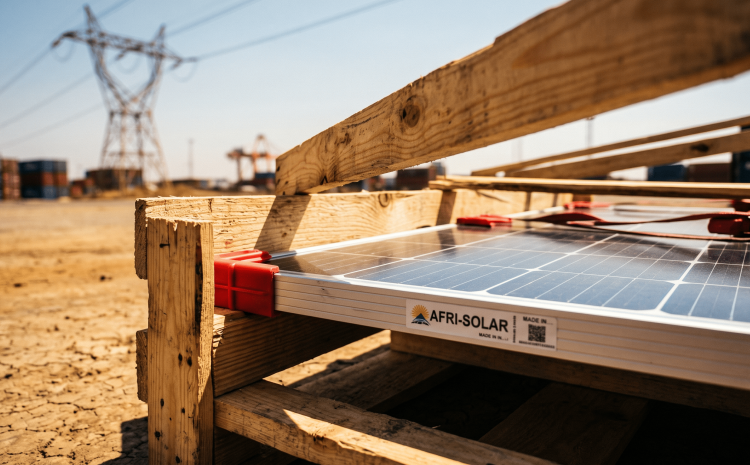
Here is what is actually true. In the first 3 months of 2026, 15 African countries imported over $400 million of solar panels. For the whole of 2025, the same group imported $650 million. The continent bought more than 60% of a year’s worth of solar in a single quarter.
And the utility that has to receive it just asked everyone to slow down.
The furnace is already bigger than the shovel.
Kenya Power’s managing director Dr Joseph Siror put numbers on it. Wind and solar are already 20% of Kenya’s grid. The working global limit for variable sources as a share of firm capacity is about 15%. At peak demand, 1,900 megawatts, they run at 34%. At low load, 1,200 megawatts, 36%. The other 80% of the system is still geothermal, hydro, imports and thermal, holding the whole thing steady.
“The true cost of wind and solar is its own cost and the additional power we must pay for to stabilize the grid.”
JOSEPH Siror
Read that as an invoice, not an opinion. Every megawatt of sun that lands without something standing behind it has to be shadowed by a megawatt of something else, kept warm, paid for, and often never used.
Kenya sits at 20%. Egypt is at 10.4%. Ethiopia 5.3%. Uganda 4%. Tanzania 1.2%.
Kenya hit the wall first. Everyone else is queued behind it.
The bill is already being paid, quietly.
Mozal, the largest aluminum smelter on the continent, has sat dark since March 2026 over a power tariff dispute. Electricity was roughly 33% of its operating cost. About 4,000 jobs went dark with it.
Across sub-Saharan Africa, businesses lose 8.4% of annual sales to power cuts. Manufacturing is about 10% of GDP here against roughly 22% in East Asia, and Africa’s share of world manufacturing has fallen from about 3% in the 1970s to under 2%.
We keep filing that under a generation gap. It is a delivery gap.
In Enugu State, Nigeria, the fix now under construction is 3 new 33KV feeders, built to break up a single 640 kilometer feeder run so that communities which have gone 20 years without electricity can get more than 20 hours of it a day. The state’s economy is $4.4 billion. It is aiming at $30 billion.
Nobody in that sentence needs another panel.
Who wins, who is squeezed, and the gap
Who wins is anyone selling firmness instead of electrons. Battery storage on commercial and industrial sites. Demand response, which is the business of paying a factory to shift its load by 40 minutes rather than building a plant for those 40 minutes. Forecasting and dispatch software. Ancillary services sold back to the utility. And the least glamorous of them, operations and maintenance on equipment that has already landed, which is the same depot and technician layer sitting unbuilt under Africa’s electric fleets.
Who is squeezed is the pure panel seller. If the business is importing modules and bolting them onto roofs, that market just met its ceiling, and the ceiling was set by the grid rather than by demand.
The gap is that no African firm of scale sells grid firming as a service. Kenya Development Corporation has mobilized $42 million for green investment against a national climate finance requirement of $62 billion a year, only about 13% of which is even mobilizable through the Treasury. KETRACO has Ksh65 billion of privately initiated transmission proposals sitting out for public comment. The money is already looking for this layer. The layer does not exist yet.
$400 million in 90 days. 15 countries. 1 missing business.
The Business Week Afrika Summit on the 1st and 2nd of October 2026 is built for gaps shaped exactly like this one, where the asset has already arrived and the business around it has not. The people who finance infrastructure, the people who regulate it and the people who will have to run it are in the same room for 2 days, which is the only way a layer like this gets specified before it gets funded.
Secure your seat and join the builders working out what to build under the panels: https://apps.little.africa/events/105
Somewhere in Gisagara this morning, a man is standing in a peat field with a shovel, in front of a furnace built to eat 4 times faster than he can dig.
The furnace was always going to be the easy part.