

The Money Rails Are Being Rebuilt: Stablecoins Just Went From Threat to Infrastructure
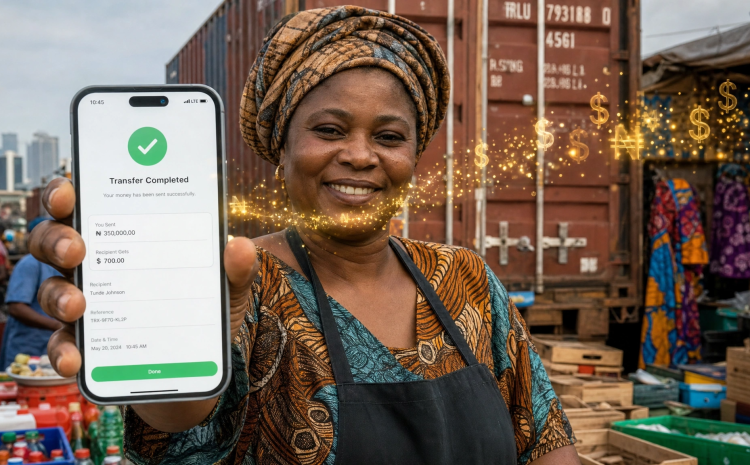
3 stories landed in Nigeria within the same week. Read separately, they are routine fintech news. Read together, they describe a financial system being rebuilt from the rails up.
Story 1: The Regulator Blinked First
The IMF urged Nigerian authorities to bring Stablecoins and crypto-asset activity into the regulatory framework,
not to ban it, to regulate it.
Buried in the same advisory is the number that explains the surrender: 40% of Nigerians already use cryptocurrency for international transfers.
The scale is hard to overstate. Nigeria processed nearly $22 billion in Stablecoin transactions in a single year, roughly 43% of all crypto volume in Sub-Saharan Africa. The wider region moved over $200 billion in on-chain value between mid-2024 and mid-2025. When 4 in 10 citizens of Africa’s largest economy route money through an instrument, the policy question stops being whether to allow it and becomes who supervises it. Nigeria’s SEC has approved just 2 exchanges, Quidax and Busha, since August 2024, with other applications pending nearly 2 years. The infrastructure is running years ahead of the licence queue.
Story 2: The Incumbent Repositioned
The same week, Flutterwave CEO, Olugbenga Agboola laid out his vision for the company’s next decade: not a payments processor, but Africa’s financial operating system. The 2 load-bearing details:
- Flutterwave secured a microfinance banking licence in Nigeria
- Agboola positioned stablecoins as a settlement layer inside existing payout infrastructure.
This is plumbing.
His framing of the prize:
“Money moves at the speed of the internet, not at the speed of banks closing up their house.”
Olugbenga Agboola
Africa’s most valuable fintech is betting that the next decade belongs to whoever owns the compliant layer where fiat rails and Stablecoin rails meet.
Story 3: The Cost of the Old Rails, Itemized
Why does any of this matter to an ordinary business?
Because the old rails are quietly taxing every cross-border transaction. The numbers, itemized:
- FX conversion spreads of 2 to 5% on card transactions, $2,000 to $5,000 a month in hidden cost for a business processing $100,000.
- Settlement at T+5 against near-real-time domestic transfers, delays that cost emerging-market SMEs up to 10% of annual revenue in cash flow constraints.
- Chargebacks costing merchants $3.75 for every $1 reversed.
- Failed payments driving up to 17% of checkout abandonment.
- Traditional remittance fees still average 8.45%, while a stablecoin transfer settles in minutes for under $1.
This is the margin the rebuild is coming for. It is also the margin that killed companies, Lipa Later’s dollar-borrowing, shilling-lending collapse was, at its core, a casualty of the old currency rails.
The Signal for Builders
Who wins?
The builders of the compliant layer: licensed on/off ramps, treasury tools that let businesses hold and settle across naira, shillings, cedis, and dollars, corridor-specific payment products where the spread is fattest.
Early movers on Stablecoin corridors are reporting 200 to 300% year-on-year growth in cross-border volume.
Who gets displaced?
Correspondent banking middlemen and card-rail intermediaries who priced African payments at 8% because nobody could route around them. Now everybody can.
The gap for African entrepreneurs is precise: regulation is arriving, the volume already exists, and only 2 licenses have been issued. The companies that are licensed, liquid, and live when the framework lands will own the corridor for a decade.
The money has already moved. The rails are catching up.
The builders rewiring how money moves across African borders, and the regulators learning to license them, are setting the terms of the continent’s next financial decade. The Business Week Afrika Summit on 1st and 2nd October 2026 puts them in the same room. Secure your seat.
#TwendeBWA