

Africa’s Banks Are Now Bought by African Banks
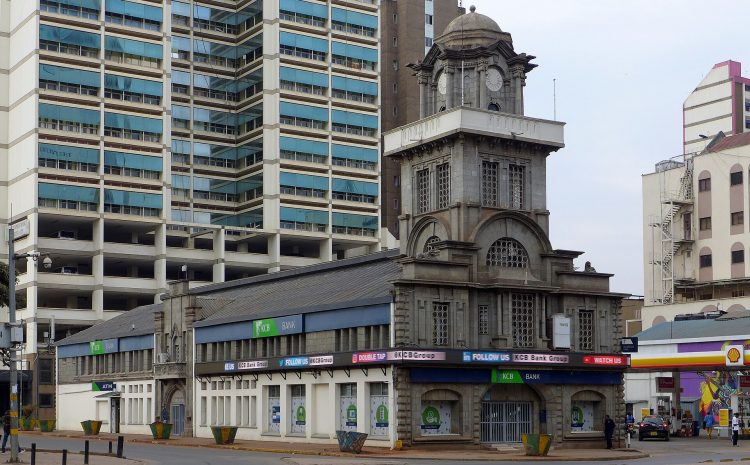
On Wednesday, a Namibian bank group bid for a South African lender. On 1 October, a Moroccan bank agreed to take over a French bank’s business in Ghana. In August, Kenya’s central bank cleared a South African bank to take control of NCBA.
3 deals. 3 African buyers.
It was not always this way. For most of the last century, African banks were bought, built and run from somewhere else. The money that moves them now starts on the continent, and the way it moves has changed.
This week
Capricorn Group, the Windhoek-listed owner of Bank Windhoek, agreed to buy 81.6% of Centrafin, a South African asset finance house, at an enterprise value of R788.3 million, with an option to take the rest over 5 years.
“South Africa is an important market in our growth ambitions, and Centrafin presents us with the opportunity to enter this market through an established operating financial services business.”
David Nuyoma, CEO of Capricorn Group
Nobody built a branch. Capricorn bought a working business with customers, staff and a R3 billion loan book.
In Accra, the Bank of Ghana cleared Attijariwafa Bank of Morocco to buy 55.22% of Société Générale Ghana from its French parent, with Ghana’s state pension fund, SSNIT, taking another 5%. Société Générale bought into the bank in 2003. It is leaving a market where banks earned a 22% pre-tax return on equity in the first 8 months of this year.
Attijariwafa has done this before. In 2017 it bought all of Barclays Egypt, 56 branches, when Barclays left.
The long road
To see how far this has come, follow 1 Kenyan bank.
- 1896: The National Bank of India, founded in Calcutta, opens a branch in Mombasa.
- 1958: It merges with Grindlays Bank and becomes National and Grindlays.
- 1970: Kenya’s government takes 60% and renames it Kenya Commercial Bank.
- 1988: The bank lists its shares.
- 1997 to 2012: KCB builds its own subsidiaries in Tanzania, South Sudan, Uganda, Rwanda and Burundi.
- 2019: It takes over National Bank of Kenya.
- 2021: It pays Sh4.92 billion for 62% of Banque Populaire du Rwanda, sold by the London-listed Atlas Mara.
- 2022: It buys 85% of Trust Merchant Bank in the DRC, priced at 1.49 times its book value.
- 2025: It sells National Bank of Kenya to Nigeria’s Access Bank.
A colonial branch became a national bank, then a builder, then a buyer. Last year it became something new: a seller to another African bank.
The lesson
Nedbank learned the difference between owning a piece and owning the business the expensive way.
For 17 years the South African bank held 21.2% of Ecobank, the pan-African lender with a presence across West and Central Africa. The stake cost it about $500 million. It held 2 of Ecobank’s 14 board seats. In August 2025 it sold the whole stake for $100 million.
$500 million in. $100 million out.
When Nedbank announced the sale, it said its future in Africa lay in “businesses Nedbank Group owns and controls”. 5 months later, in January, it bid for 66% of NCBA Group for about $855.5 million, 20% in cash and 80% in new Nedbank shares.
NCBA’s own history is the continent’s in miniature. Its older half, Commercial Bank of Africa, was founded in Dar es Salaam in 1962 by a European and American consortium that included Bank of America, moved to Nairobi when Tanzania nationalized its banks, and passed to Kenyan owners in the 1980s. In 2019 it merged with NIC to form NCBA, which now says it serves more than 60 million customers.
When Nedbank’s offer closed in July, shareholders tendered 79.9% of NCBA’s shares for an offer that needed 66%. The Central Bank of Kenya approved the deal on 28 August. NCBA keeps its name, its management and its listing in Nairobi.
“By combining NCBA’s substantial local presence and Nedbank’s capital base, expertise and enduring commitment to Africa, we see a compelling platform for sustainable growth.”
Jason Quinn, CEO of Nedbank Group
This time Nedbank wanted the controls, not a seat.
The opening
Put the deals together and the pattern is clear. The sellers are leaving: a French parent in Ghana, a British bank in Egypt, a London-listed investor in Rwanda. The buyers are African, and they buy control of a business that already runs.
That changes what a founder can build toward. Look at what Capricorn actually bought.
“Over the years, Centrafin has successfully evolved from a technology equipment rental business into a diversified asset finance house with a R3 billion book spanning a broad range of asset classes.”
Jenny Gill, Managing Director of Centrafin
It started out renting computers. It grew a loan book in 1 niche, and then in several, and a bank from the next country over paid for the privilege of skipping that work.
Every bank in this story bought time: customers, licenses and a loan book it did not have to grow itself. A specialist lender that builds those in 1 niche is building exactly what an expanding African bank needs.
In 1896, the bank in Mombasa was a branch of a bank born in Calcutta. In 2026, the bank taking control in Nairobi answers to Johannesburg.