

Africa’s IPOs Are Going Where the Money Already Is
4 African companies made listing news last week. Each went in a different direction.
1 is coming to Cairo. 1 is crossing into Nairobi. 1 is looking at New York. 1 is leaving Johannesburg after 62 years.
Read them together and they follow 1 rule. A company lists where its buyer is.
Cairo: the big tickets
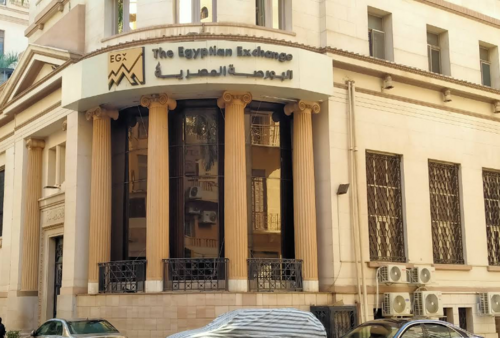
MNT-Halan, the Egyptian lending and payments unicorn founded by Mounir Nakhla, opened subscriptions on 7 October for 20% of its Egyptian arm, MNT Tech Holding. 320 million shares at EGP24.50 each: EGP7.84 billion, about $150 million. It is the largest IPO on the Egyptian Exchange since e-Finance in 2021.
Look at who it is built for. 272 million of the 320 million shares go to a private placement. Wealthy individuals must put in at least EGP5 million, institutions at least EGP10 million. The public gets the other 48 million.
And the offer is fully secondary. The shares come from the parent, so the IPO money goes to the parent. MNT Tech gets new capital separately, through an EGP4 billion injection from the group at the IPO price.
The buyer is local and large. Foreigners made up just 6.1% of trading value on the Egyptian Exchange in the third quarter. Egyptians made up 90.5%.
85% of the shares, for the big tickets.
Nairobi: the shilling tranche
Dangote Petroleum Refinery published its East African terms on Wednesday. It will sell up to 729 million depositary receipts on the Nairobi Securities Exchange at Sh53.50 each, raising up to Sh39 billion, or $300.4 million. That is almost 20% of the refinery’s $1.6 billion IPO.
Up to. The offer succeeds with as little as Sh50 million, and the minimum order is still Sh107,000. The list closes on 13 October.
Dangote is going where Africa’s own savings are. In Lagos, domestic investors made up about 95% of all trading on the Nigerian Exchange in August, according to NGX Group’s CEO, Temi Popoola.
Up to 20% of Africa’s biggest IPO, priced in shillings.
New York: the strategic buyer
Trinity Metals mines tungsten in Rwanda, at Nyakabingo, along with tin and tantalum. Tungsten goes into armor, drill bits and aerospace parts, and China controls about 85% of global supply. Since Beijing curbed exports, the price has risen more than 8 times in 2 years.
Trinity’s CEO, Peter Geleta, told Reuters in May that he wants to raise $100 million to $200 million on the New York Stock Exchange within 12 to 18 months. This week he said talks with advisers have begun.
“Our preference is New York given the liquidity and appetite for critical minerals.”
Peter Geleta
The buyers are already American. Trinity is majority-owned by TechMet, whose shareholders include the US International Development Finance Corporation, and it has applied to the DFC for $35 million to $50 million more. Its first tungsten shipment to the US went to a processor in Pennsylvania last year.
“All our production goes to the US, Europe and Thailand … we don’t supply China.”
Peter Geleta
The buyer is American, so the listing will be too.
Johannesburg: the buyer who already owns it
On Monday, Sanlam offered R505 a share in cash for the 37.3% of Santam it does not already own. Sanlam Life holds the other 62.7%. The price is 26.6% above Santam’s close the Friday before.
If shareholders agree, Santam leaves the JSE, where it has traded since 1964, and the Namibian and A2X exchanges with it.
Santam is not struggling. Its earnings per share rose 7% in the first half and its interim dividend 10.2%. It is leaving because its biggest buyer was always its parent.
“It makes sense to buy out the minorities and move into this next chapter.”
Andrew Bahlmann, CEO of Deal Leaders International, who pointed to the “onerous requirements for having two listed entities”
62 years, then 1 buyer.
The rule
4 directions. 1 pattern.
The Egyptian float is sized for institutions because Egyptian institutions are the ones buying. Dangote is chasing East African savers because that is where African savings sit: 95% of the trading in Lagos is Nigerian money. Trinity is heading to New York because the people who need its tungsten are there. Santam is leaving because the 1 buyer that mattered owned most of it already.
Notice who is selling, too. MNT-Halan’s IPO money goes to its parent. Quickmart’s Nairobi IPO, open this week, pays Sh15 billion to its private equity owner, not the supermarket. The exchanges are working as exits as much as they are working as fundraisers.
For a founder deciding where to list, the question is not which exchange is biggest. It is where the person who wants your shares already lives.
This week, 4 companies answered it 4 ways. In Cairo, with a EGP10 million minimum. In Nairobi, in shillings. In New York, with a tungsten mine. In Johannesburg, by walking off the board.