

Kenya Cut Fertilizer 69% And Vegetables Still Went Up 30%. Here Is Why.
Let’s start in October.
The US Climate Prediction Center now puts a very strong El Niño at 95% for October through December, up from 81% in July, and gives it a 69% chance of running stronger than anything in the record since 1950. In southern Africa that reads as drought. In eastern Africa, as too much water at once. Either way it is rainfall, and rainfall is the input under almost everything this continent grows.
Now rewind, to the harvest that has already moved.
Ghana cut its 2026/27 cocoa estimate from 750,000 tonnes to 650,000, down 13%. Côte d’Ivoire’s fell from 2.2 million tonnes to 1.8 million, down 18%. StoneX cut its projected global surplus from 149,000 tonnes to 25,000, and Transgraph its own from 415,000 to 80,000.
The forecast has not landed yet. The market has already paid for it.
Rewind again, to this week in Kigali.
AGRA launched its 2026 Impact, Learning and Foresight Report at the Africa Food Systems Forum, in front of 5,000 delegates from more than 50 countries, and the headline is a genuine African win. Agricultural output has roughly doubled in real terms over 20 years. Cereal yields are up 40%. Agricultural value added has gone from 2.3% growth to almost 4%.
Then read the second half of the same report. Value added per farm worker is $1,500 against a global average of $4,300. African maize runs 1.6 tonnes a hectare against 4 globally. The agrifood financing gap is $180 billion a year, $65 billion of it on small and medium agribusinesses.
And 1 line explains the other 3.
Irrigated cropland in Sub-Saharan Africa is roughly 3% in AGRA’s report. Its board chairman, Hailemariam Dessalegn, said 6% the same week. Asia irrigates about 40%. The argument does not depend on which African figure you accept.
Africa did not double its harvest.
Africa doubled the part of its harvest that fertilizer and rain could reach together, and then celebrated the fertilizer.
Rewind 1 more time, to 2022, and watch a government prove it with its own money.
Kenya took a 50kg bag of fertilizer from about Sh6,500 to Sh3,500 in September 2022, to Sh2,500 in 2023, and to Sh2,000 last month, and distribution went from 1.4 million bags to 8.6 million. Maize went from 34.25 million 90kg bags to 44.76 million. Imports fell 39.1%, from 793,752 tonnes to 309,300. The 2026/27 budget puts Sh18 billion behind that subsidy.
It worked. That is the uncomfortable part.
Now open the Kenya National Bureau of Statistics release from that week. Food inflation is 9.0% against a headline rate of 6.6%. Sifted maize flour fell 2.7% in the month. Irish potatoes rose 32.7% over the year. Sukuma wiki rose 29.8%.
Read that split again. The subsidized, rain tolerant staple got cheaper. The unsubsidized, unirrigated vegetable went up 30%.
Fertilizer is a bag. You can buy it, ship it, subsidize it and count it in a warehouse. Water is infrastructure. Nobody gets a photograph at a borehole.
Somebody has already run the counter-experiment.
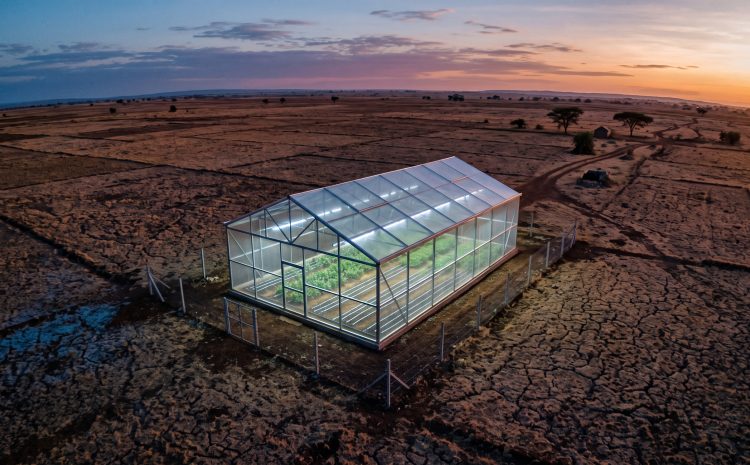
Kakuzi Plc, in Murang’a, put blueberries under controlled conditions against a Driscoll’s offtake contract. First half production went from 8,400kg to 42,000kg in 12 months, and the segment went from a KSh17 million loss to a KSh13 million profit. Kakuzi is now committing up to KSh420 million to a 30 acre purpose built greenhouse.
That is not a farming story. It is a financing structure that happens to grow fruit: controlled water, a named global buyer, and an asset a lender can see.
The same structure is going up at national scale, and almost none of it is African private capital.
Gabiro Agribusiness Hub, Rwanda. 15,600 hectares, leased at $375 per hectare a year.
Muvumba Dam, Rwanda. 10,000 hectares irrigated.
Nyabarongo II, Rwanda. More than 20,000 hectares.
Kakuzi, Murang’a. 30 acres under glass, against a contract signed in California.
Who wins, who is squeezed, and the gap
The winner is whoever can lend against water. Not the farm, not the harvest, not the farmer’s logbook: the drip system, the borehole, the dam offtake, the greenhouse frame, secured by a signed buyer at the other end. That is a $65 billion book sitting unwritten.
The squeezed are the distributors whose whole margin was the delta between Sh6,500 and Sh2,000, and every rain fed smallholder about to learn that a 20 year productivity gain can be handed back in 1 season.
The gap is the middle. Africa holds 9% of the world’s freshwater potential and irrigates 3% of its cropland. Between those 2 numbers sits the drip installer, the offtake verifier who makes a Driscoll’s contract bankable to a Kenyan lender, and the irrigation company that sells water by the hectare instead of by the pipe.
The Business Week Afrika Summit runs in Nairobi on October 1 and 2, the opening days of the window the forecasters are pointing at. The people who finance African assets and the people who grow them have spent 20 years in separate rooms while the rain did the underwriting. That room is the correction. Secure your seat and join the builders who are done waiting on the sky: https://apps.little.africa/events/105
It is 4am in Murang’a. The drip lines are running under 30 acres of glass, on a timer, into soil somebody already sold. Outside the frame, the sky is doing nothing at all.