

Africa Does Not Make Its Medicine. It Packages It.
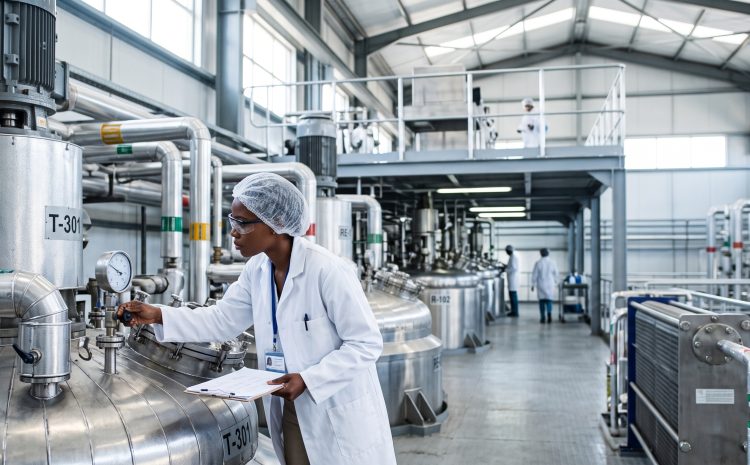
Africa imports more than 70% of its medicines.
Which means Africa makes just under 30% of them, and 30% is the number quoted in every speech about pharmaceutical sovereignty.
Hold on to the 30%. It is about to get smaller.
What they tell you is that Africa is building a pharmaceutical industry factory by factory, and the import bill is coming down.
Here is what is actually true.
A medicine is 2 things. There is the active pharmaceutical ingredient, the chemistry that treats you, and everything else: the tablet, the coating, the blister pack, the box. African manufacturers overwhelmingly do the second part. Africa imports more than 95% of its active pharmaceutical ingredients, mostly from India and China. In Nigeria, the continent’s second largest pharmaceutical market by value, local manufacturers source more than 90% of their APIs and excipients abroad.
So recompute the 30%.
The factories are real. The jobs are real. The tablets are real. The molecule arrived in a drum from Hyderabad. Measured by the part that does the actual work, the African share of an African medicine is not 30%. It is the packaging.
That is the number Emzor is now trying to move.
A factory for the part nobody builds
Late in August, Emzor Pharmaceutical Industries raised a N26.7 billion bond, about $19.8 million, on Lagos’s FMDQ exchange. The proceeds go to working capital and to finishing a plant at Sagamu, Ogun State: $23 million, WHO and GMP compliant, 400 tonnes of capacity, built to make artemether, lumefantrine, sulfadoxine and pyrimethamine.
Those are antimalarial active pharmaceutical ingredients, and it is the first full scale plant of its kind in West Africa. Emzor has named HIV antiretrovirals as the next product line.
Emzor is not a startup. Stella Okoli founded it in 1977. It carries more than 120 medicines across 16 therapeutic categories and is owned by Verod, an African private equity firm.
Now the part the announcement does not lead with.
The plant is late. It was originally financed with a 13.85 million pound European Investment Bank loan. It was due to open in late 2025. Then early 2026. It is still not finished, and no revised commissioning date has been published.
That is 2 missed dates on the most important factory in West African pharmaceuticals, and it frames what the bond is. This is not an expansion. It is completion money.
Where the money came from is the second story.
The bond carries a 19% coupon over 5 years, issued through Emzor Pharma Funding SPV Plc, lead sponsored by Renaissance Capital Africa, inside a N40 billion program. It was oversubscribed.
Read that again with the 30% still in your hand.
This platform has spent months documenting African institutional money refusing African hard assets: mandates permitting 25% against portfolios showing under 1%, trustees who price a factory as career risk.
This time the domestic bid showed up, and there was more of it than the issue could take.
It arrived at 19%, which is not charity. At 19% over 5 years the arithmetic only closes if the plant runs, ships and sells. Nigerian investors did not fund a cause. They priced a chemical plant and bought it.
Who wins, who is squeezed, and the gap
Winning is every African formulator who waits 12 weeks and an ocean for a drum of API and could instead wait 3 weeks and a border. The African Medicines Agency, ratified by 31 states, is worth something in proportion to how much regional production exists to regulate. Fidson Healthcare, first Nigerian pharmaceutical company past N100 billion at N119.06 billion, is building toward sub Saharan Africa’s largest plant on the same logic.
Squeezed is the importer whose entire margin is freight and foreign exchange between Mumbai and Lagos.
The gap is not another plant. It is the layer around this one, and almost none of it exists.
An API plant runs on intermediates, solvents and reagents, and those are imported too, so substitution moves 1 step upstream and waits for somebody to follow it. Batch release, stability studies and GMP qualified analytical testing are the proof layer, and a country that cannot independently test the fuel it burns is not equipped to test the chemistry it swallows. Registration dossiers across 31 ratifying states are a profession, not a formality. Temperature controlled logistics into 15 ECOWAS markets is a business somebody has to own.
$11 billion is the estimated cost of building Africa’s pharmaceutical industry by 2030. Emzor’s bond is $19.8 million of it.
The distance between those 2 numbers is not a funding gap. It is a build list.
Which is the argument the Business Week Afrika Summit exists to hold in 1 room. On 1 and 2 October 2026, the operators running African factories sit with the investors who priced this bond and the regulators who decide whether a Nigerian molecule can be sold in Accra. Until those 3 groups share a conversation, the continent keeps funding the box and calling it the medicine.
Secure your seat and join the builders working out which step of the chain they intend to own: https://apps.little.africa/events/105