

Kenya Has Sold The Cheapest Factory Power In East Africa Since 2023. Manufacturing Has Shrunk Every Year Since.
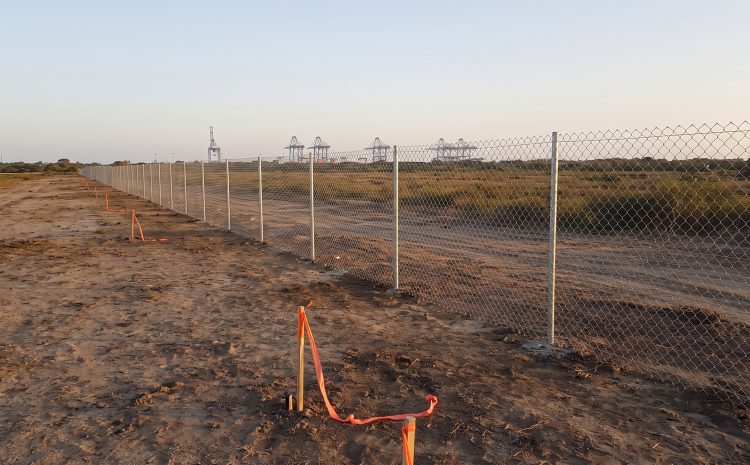
There is a fence going up at Jomvu, on the western edge of Mombasa, Kenya.
Behind it: 535 acres, a 6 month deadline, and electricity at Sh10 a unit.
Outside it: a country importing 12% of its power.
On 8 September the county government of Mombasa, Mombasa Free Zone Ltd and DP World signed a Sh12bn deal, more than $100m, to build a Special Economic Zone at Jomvu. 67 companies have registered interest. Phase 1 is 40 hectares, given 6 months, with 120 days for the access road. The zone links to the standard gauge railway and points at the East African Community and COMESA.
Then came the headline: SEZ investors pay Sh10 per kilowatt hour.
The fence is not new.
The Energy and Petroleum Regulatory Authority set that Sh10 band on 29 March 2023, across 14 of Kenya’s 15 special economic zones. Kedong in Naivasha has been at Sh5 since a pilot around 2019. This week a president re-committed to a rate his own regulator wrote 3 and a half years ago, and attached it to 1 project.
That changes the question. Kenya is not about to find out whether cheap fenced power attracts factories. Kenya already knows.
Inside the fence, the arithmetic is real.
Kenya’s national industrial tariff runs $0.18 to $0.23 a unit, roughly Sh23 to Sh30. The fenced Sh10 is about $0.077. That undercuts Morocco at $0.09 to $0.12, South Africa at $0.09 to $0.19, Tanzania at $0.12 to $0.15 and Uganda at $0.10 to $0.13. Only Ethiopia, at $0.01 to $0.05, is cheaper.
So for 3 and a half years, an SEZ manufacturer in Kenya has bought the second cheapest industrial electricity in the region.
Here is what that bought.
Kenya’s entire SEZ program, across 15 zones, has created just over 7,000 direct jobs and contributed about Sh91bn to GDP. 3,000 of those jobs came in the last 12 months.
1 signing ceremony this week promised 10,000 from a single zone.
Over the same window the thing the tariff was meant to defend kept sliding. Manufacturing was 7.3% of GDP in 2024 and 7.1% in 2025, against a Vision 2030 target of 15%.
The price was never the binding constraint.
Outside the fence, the country is short.
Kenya imported 12% of its electricity in the first half of 2026, up from 10% a year earlier, most of it Ethiopian hydro. Its reserve margin fell to 3.3% in June against an internationally recommended 20% to 35%. In May a hyperscale data center at Olkaria was halted because phase 1 alone wanted 100MW, roughly 4% of national peak demand.
A fence does not generate electricity. It only decides who pays less for what already exists.
Ghana built the same fence out of tax.
Accra waived import duty on electric vehicles for 8 years, waived duty on assembly kits for another 8, and zero rated VAT on local assembly. It worked on its own terms: Ghana holds roughly 29% of Africa’s EV market. Now cars, factories, mines and data centers converge on 1 grid, and the government is scrambling to standardize charging to protect it.
The incentive was granted. The infrastructure was not.
Who wins, who is squeezed, and the gap
The winner is the operator who sells reliability rather than price. Kenya’s clearest SEZ success is Tatu City, privately developed, which turned serviced land and finished infrastructure into thousands of jobs while state zones waited. That is a repeatable business, not an accident: buy land, service it properly, sell certainty.
The squeeze lands on any manufacturer who reads Sh10 as a promise. A regulator sets that tariff on a cost reflective formula, and reviews it on a cycle. The megawatts behind it are a separate problem on a separate timeline.
The gap is the 2 things the fence cannot supply. First, captive generation and storage inside the zone, because that is the only way a Sh10 rate becomes a Sh10 delivery at 8pm. Second, the energy hungry conversion itself. A week ago Kenya told a 115 year old soda ash operation that its next license comes with a factory attached, and the obvious build there was glass. A glass furnace is among the most power hungry machines a founder can switch on. Somebody has to put that furnace behind a fence with a tariff on it.
Behind those 2 sit the ordinary ones: the contractors on a 120 day road, and the suppliers those 67 companies will need before concrete.
“A production and export oriented economy.”
WILLIAM Ruto, Kenya’s president
That is the correct ambition. The gap between it and 7,000 jobs is where the businesses are.
This is the argument the Business Week Afrika Summit exists to host. On 1 and 2 October the regulators who set the band, the zone operators who sell the land, and the founders deciding whether to build inside somebody else’s fence will be in 1 room, in the year the tariff comes up for review.
Come and ask the people who set the price what happens after they set it. Secure your seat and join the builders: https://apps.little.africa/events/105
At Jomvu the surveyors are already pegging the boundary. The fence will be finished long before anyone works out what is on the other end of the wire.