

Oga Obinna Didn’t Throw a Boxing Match. He Built a Media Company That Happens to Box.
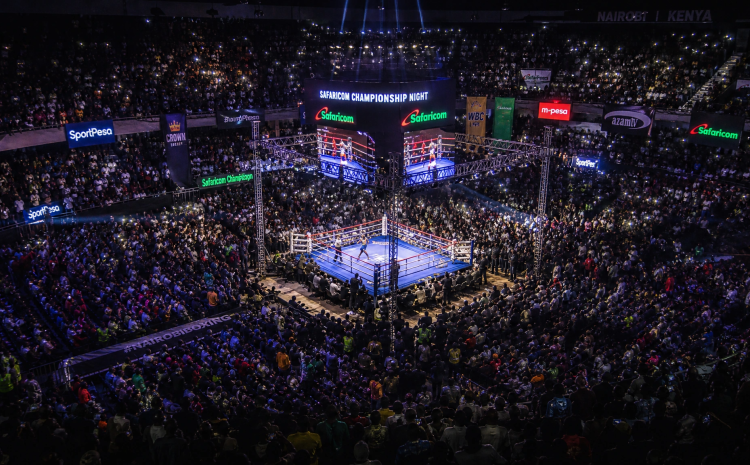
On 20 June 2026, a comedian filled the Sarit Expo Centre in Westlands for a boxing card almost nobody would call boxing.
Vurugu 2 had 28 fighters, a Nigerian Afrobeats headliner in Ruger, Khaligraph Jones and Wakadinali on the mic, a Ugandan businessman trading punches with a Kenyan musician, and a cameo from the actual boxing legend Fatuma “Iron Fist” Zarika lending the circus a thread of credibility.
SportyBet put its name on the whole thing.
It is easy to file this under “Kenyan celebrity chaos”, as Vurugu is Swahili for exactly that, and move on.
That would be a mistake.
What Oga Obinna has built is one of the cleanest examples of a vertically integrated entertainment business on the continent, and African builders should study the architecture, not the punches.
He owns every layer of the stack.
Most African creators rent their audience. They make content for YouTube, for a TV station, for a brand’s campaign, and someone else owns the pipe, sets the rates, and keeps the data.
Obinna inverted it.
He owns the format (Vurugu is his IP), he owns the distribution (Obinna TV Studios was the sole authorized broadcaster of the event, and he publicly hunted down anyone restreaming it), and he owns the audience that makes the rest possible.
Obinna TV Extra alone carries 731,000 subscribers and has banked over 127.2 million views in 4 years. His channels reportedly pull in more than KSh 3 million a month on their own.
That ownership is why he can monetize the same night at every price point at once.
Look at the revenue map.
A regular ticket went for KSh 2,000. A VIP table went for KSh 200,000, a 100x spread on the same room.
The global pay-per-view stream sold at KSh 200, a number engineered for volume: low enough that a student in Kisumu or a Kenyan in Dubai pays without thinking, multiplied across a fanbase that already lives on his channels.
On top of that sits title sponsorship from SportyBet, a betting company buying direct access to a young, male, sports-hungry audience it would otherwise spend a fortune chasing, plus the music, the brand activations, and the political theatre.
Vurugu 1 in April pulled President Ruto into sponsoring 2,000 tickets and pledging KSh 1 million to each fighter; KSh 4 million from one man, for a fight night.
This is the conversion layer, applied to attention.
Business Week Afrika writes constantly about owning the next step in a value chain instead of handing it to someone else.
Obinna did it with culture.
He took the rawest African resource there is, the appetite for live, loud, communal spectacle, and built the rails to convert it into tickets, subscriptions, PPV, sponsorship and IP. The fighters are the dairy; the platform is the processing plant.
The “is it even real boxing?” controversy.
A county official accused him of scripting it to cash in, misses the point entirely.
WWE is not real wrestling. It is a multi-billion-dollar entertainment IP. Obinna is not promising sport; he is selling a format. Scripted or not is a sports question.
He is not in the sports business.
Though the man himself would be best to answer the question.
His story however, is one every entrepreneur ought to learn from.
The Entrepreneur Opportunity Lens.
Who wins?
Creators who own their IP and distribution instead of renting audiences from broadcasters. Sponsors like SportyBet who get a built-in, high-attention crowd.
The fighters and artists handed a stage, Mbavu Destroyer says the first Vurugu changed his life.
And the format itself, which is borderless: celebrity-boxing IP is already a global category, and an African version with cross-border bouts is a franchise waiting to be licensed city by city.
Who is displaced?
Traditional TV stations and event promoters who used to gatekeep who got famous and who got broadcast. Sports federations moving at federation speed while a comedian builds the audience they wish they had.
The gap to build into.
The infrastructure under the creator-led live event.
African-grade PPV and ticketing rails that can charge KSh 200 to 200,000 people reliably. Rights and anti-piracy tooling, Obinna is policing restreams by hand.
Sponsorship-matching that connects creators to brands without an agency clipping the middle.
The “franchise kit” that lets the next builder run a Vurugu in Kampala, Lagos or Accra. Obinna built his stack himself; almost nobody is selling that stack as a service to the thousand creators who need it next.
Africa’s entertainment appetite is one of its largest untapped markets, and the people learning to own it, the way Obinna owns Vurugu, are building real companies behind the noise.
The creators turning African attention into IP, the sponsors and platforms backing them, and the operators building the rails underneath are in one room at the Business Week Afrika Summit on the 1st and 2nd of October 2026, because the next great African business might not look like a business at all. It might look like chaos, sold by the seat.
#TwendeBWA