

Kes 20 a Day: How Africa Is Dragging the Phone Down to Meet the Wallet
For years the story of Africa’s digital economy had one stubborn floor under it:
The phone itself.
You cannot bank, learn, sell, ride-hail or borrow on a device you do not own. And across the continent, 63% of people remain offline despite mobile networks already covering where they live. The barrier is not signal. It is the price of the handset.
That floor is now being attacked from three sides at once, and all three are businesses, not charity.
Side 1: build it here.
This week Kenya learned that East Africa Device Assembly Kenya (EADAK), backed by Safaricom, Jamii Telecommunications and the Chinese manufacturer Lel Technology, assembled 700,000 devices in the year to March 2026: smartphones, educational tablets and KYC units.
The plant, live since October 2023, has capacity for 3 million units a year. Its Neon-brand 4G smartphones sell for between Sh3,000 and Sh7,499.
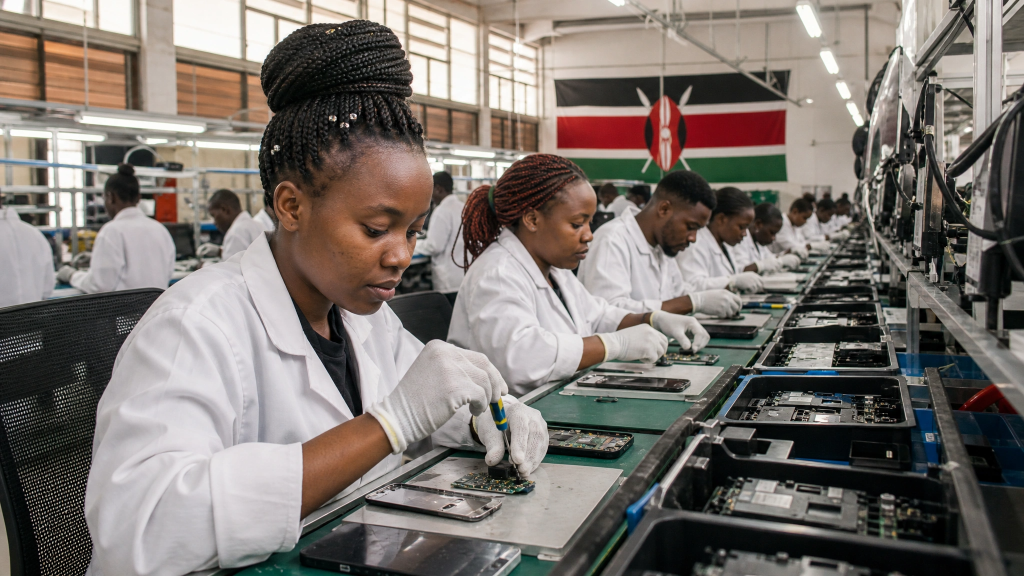
Local assembly is value-addition in its purest form. It strips the import cost out of the price, trains a technician workforce, and keeps the margin onshore instead of wiring it to Shenzhen.
Side 2: finance it.
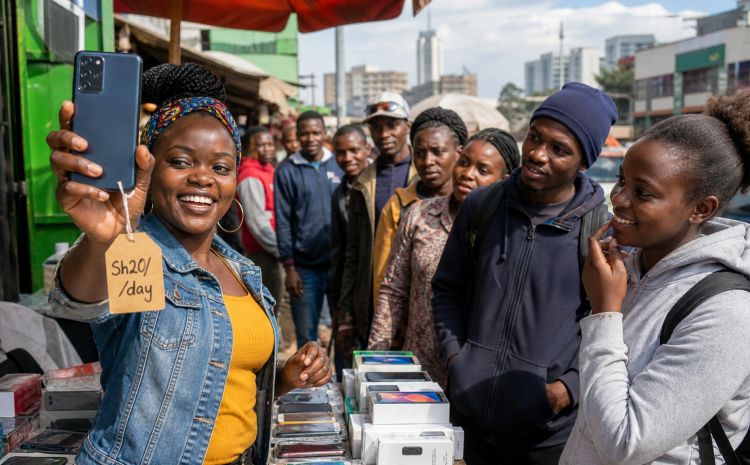
A Sh7,000 phone is still a wall for a household living day to day. So the model that cracked solar and pay-TV has come for handsets. EADAK offers its phones from Sh20 a day over 9 months, airtime-sized payments, not a lump sum.
M-KOPA, the asset-financier, says it has put 3.2 million smartphones into hands since January 2023. Mogo has financed roughly 500,000 across East Africa. The device stops being a purchase and becomes a subscription the buyer can actually carry.
Side 3: untax it.
The third lever is policy.
The GSM Association, alongside the World Bank and the ITU, is pushing governments to scrap the stack of levies that sits on entry-level phones.
In Kenya, a 25% customs duty, 16% VAT, a 2.5% import declaration fee and a 2% railway levy that together pile a 55.5% tax burden onto an imported handset. Strip the non-customs duties and that falls to 25%.
The target is the sub-Sh13,000 (about $100) device, the first phone a first-time owner buys.
South Africa already did a version of this in 2025. As the GSMA puts it,
Taxes on entry-level phones “directly raise the price floor for first-time device purchasers.”
GSM Association.
Now look at what the demand side just did. Kenya’s connected smartphones crossed 50 million for the first time. 5G data use hit 102 million GB in a single quarter, up from 80.5 million. The average 5G user burns 53.5 GB a month, more than three times the national average. The appetite is already there and outrunning the hardware.
The Entrepreneur Opportunity Lens.
Who wins?
Device assemblers and the component, accessory and repair shops that grow around a plant. Asset-financiers who can underwrite a Sh20-a-day phone the way M-KOPA underwrote a solar lamp. Builders of vernacular app ecosystems, KYC and device-as-a-service for SMEs, the layer that monetizes a first-time owner the day they switch on.
Who is squeezed?
Pure handset importers living on the 55.5% tax-protected markup. Feature-phone-only services. Anyone whose product assumed the phone would stay out of reach.
The gap to build into.
The continent is not waiting for incomes to rise to meet the price of a phone. It is dragging the price of the phone down to meet incomes, through assembly, financing and tax reform working at once.
Every one of those is a company.
The repair network, the refurb market, the financing rail, the app store for the newly-online: each is unbuilt at the scale of 50 million-and-climbing demands.
The handset was the floor under the whole digital economy. It is being rebuilt into a doorway. The founders pouring devices, the financiers turning them into Sh20-a-day subscriptions, and the operators and regulators setting the price floor are in one room at the Business Week Afrika Summit on the 1st and 2nd of October 2026, where the people taking the next billion online meet the ones building what they do once they arrive.
#TwendeBWA