

Tanzania Banned the Dollar. Now Someone Has to Build the Shilling.
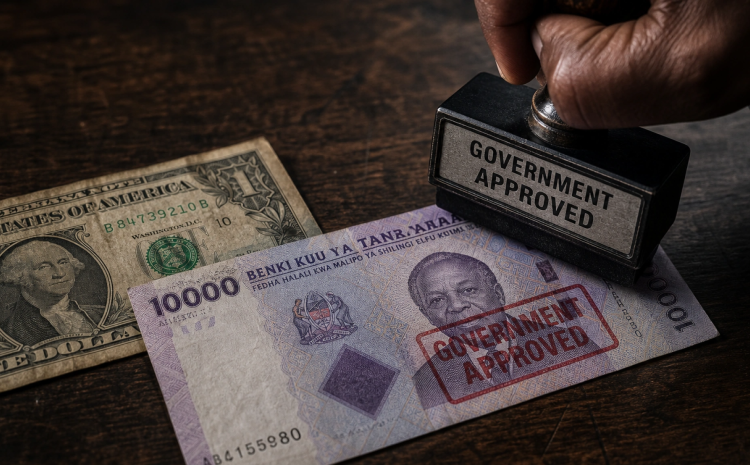
In Dar es Salaam, a school that once billed fees in US dollars now has 12 months to rewrite every contract in shillings or watch them turn to paper.
That is the quiet reach of the Foreign Currency Usage Regulations, GN 198 of 2025, which took effect on 28 March. Tanzania did not confiscate anyone’s dollars. It did something subtler and more sweeping: it made the shilling the only currency you are allowed to price, quote, invoice, or demand payment in on Tanzanian soil.
Read the provisions and they land like hammer blows.
- Quote a price in dollars: offence.
- Advertise a rent in dollars: offence.
- Refuse a customer’s shillings: offence.
Every existing dollar contract, on leases, tuition, logistics, hotel blocks, must be redenominated into shillings within 12 months or become void, unless the Minister of Finance grants an extension. The penalties run from fines to license suspension. A handful of doors stay open, tourism payments, embassies and international organizations, duty-free tills, bank credit facilities, but the default has flipped.
On the ground, the shilling is now the law of the land.
A decree can ban the symptom. It cannot mint the cause.
Here is the reframe the headlines miss. Tanzania did not do this from a position of strength. It did it because dollars had become scarce, and scarcity, not preference, wrote this law.
For years the country ran a structural gap between what it sells to the world and what it buys from it, a trade deficit that hit $4.4 billion in 2021, imports worth more than 17% of GDP, exports trailing well behind, dollar-denominated debt draining reserves with every repayment, and each of those dollars leaving the country was one fewer to defend the shilling with, so when US interest rates climbed and capital flowed out, the squeeze that every import-dependent African economy knows in its bones arrived on schedule, and
A government watching its reserves thin had two honest choices, earn more dollars or use fewer of them, and it reached for the lever it fully controlled, which is the law, because you can legislate where a currency is used long before you can legislate a currency into being earned.
The shilling has felt every bit of that pressure. It was the world’s best-performing currency between July and December 2024, up 9.51%, then gave back ground, down 3.6% against the dollar across the following year. A currency that swings like that is not being priced on sentiment. It is being priced on how many dollars actually clear through the door.
Who wins, who is squeezed, where a builder leans in
Squeezed first are the businesses that used the dollar as a hedge: landlords, schools, hauliers, hospitality groups who priced in USD precisely because they did not trust the shilling to hold its value over a lease. That hedge is now illegal. Their currency risk did not disappear. It just got handed back to them in shillings.
Which is the opening.
Because the risk is still real, someone has to carry it, and carrying risk cleanly is a business. The builder’s gap here is the conversion layer, the same instinct BWA keeps returning to: instant, compliant shilling settlement at the till with the dollar exposure managed invisibly behind it. Point-of-sale that quotes a tourist in shillings and settles the merchant the same second. Shilling-denominated hedging and forward cover so a school can lock a year of fees without a dollar clause. Contract-redenomination and compliance tooling for the thousands of firms racing a 12-month clock.
Tanzania has handed its fintech builders a captive, legally mandated market: everyone who used to reach for a dollar now needs a shilling rail that does the same job without the offence.
And the deepest win goes to the exporters. The gold-buyers Tanzania now pays in shillings to stock its own reserve, the agri-processors and manufacturers who ship value out and bring hard currency back. A law can ration dollars. Only an exporter can earn them. The country that learns to make more of what the world pays for in dollars never has to ban them in the first place.
De-dollarization is no longer a Tanzanian footnote. It is a continental conversation, from Lagos to Luanda, wherever a shilling, a naira, or a kwanza is asked to do a job the dollar used to do. That is precisely the room the Business Week Afrika Summit convenes on 1 and 2 October 2026: the founders building the local-currency rails, the operators redenominating real businesses, and the exporters who actually generate the hard currency a policy alone can never conjure.
The decree is the easy half. Building the economy that makes it true is the work, and the work is what the Summit is for.
You cannot legislate a currency into strength. You have to earn it, one export at a time.